









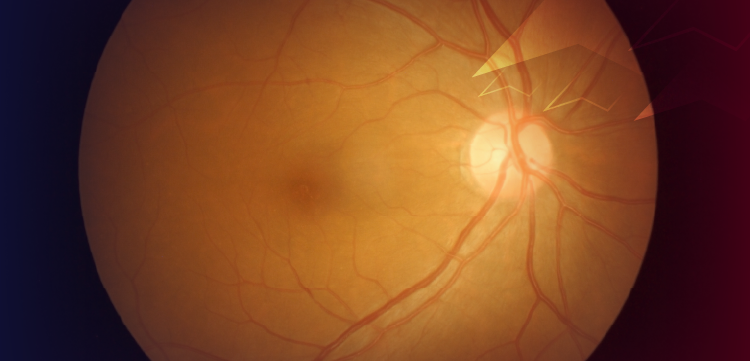






There is a correlation between functional cell loss in the retina and signs of dementia in people who have a genetic risk for frontotemporal dementia (FTD), according to researchers from the US.
There is a correlation between functional cell loss in the retina and signs of dementia in people who have a genetic risk for frontotemporal dementia (FTD), according to researchers from the US.
The US Food and Drug Administration (FDA) has approved a low-dose corticosteroid intravitreal implant for the treatment of diabetic macular oedema. (DME).
Monthly monitoring is no longer required for patients taking ranibizumab (Lucentis, Novartis) for a condition that is stable, due to a change in the drug's licence.
Non-damaging photothermal therapy using a pattern-scanning laser (PASCAL) guided by proprietary software is a safe and effective treatment for chronic central serous retinopathy (CSR), according to a recent study.
Long-term observational data presented at the 2014 European Society of Retina Specialists (EURETINA) conference support the safety and efficacy profile of the anti-vascular endothelial growth factor (anti-VEGF) agent ranibizumab (Lucentis, Novartis) for the treatment of appropriate patients across its indications
The European Commission has extended marketing authorization for an intravitreal implant with 700 mcg of dexamethasone in an applicator (Ozurdex, Allergan) for the treatment of adults with visual impairment caused by diabetic macular oedema (DME) who have pseudophakia or whose condition is considered insufficiently responsive to or unsuitable for non-corticosteroid therapy.
In a recent satellite symposium, sponsored by Bayer, the topic of macular oedema following CRVO was discussed by a panel of experts. Here, we present a summary of this meeting, highlighting the key outcomes.
KalVista Pharmaceuticals has begun a Phase I trial of its plasma kallikrein inhibitor KVD001 for the treatment of diabetic macular oedema (DME).
Researchers examining age-related changes in heparan sulphate (HS) quantity and composition in human Bruch's membrane (BrM) have discovered that the quantity greatly decreases with age, resulting in fewer binding sites for complement factor H (CFH) and affecting the ability of the 402H variant of CFH to bind BrM.
Aflibercept is effective in inhibiting vascular endothelial growth factor (VEGF) for a prolonged period of time, but possible side effects draw concerns about its long-term use in patients with age-related macular degeneration, diabetic macular oedema and retinal vein occlusion, according to the conclusions of a new study.
Inhibiting thrombin activity may be a treatment option for proliferative vitreoretinopathy (PVR), given that such activity is increased in the vitreous of patients with the disease and is associated with the activation of pro-inflammatory and pro-fibrotic pathways in retinal pigment epithelium (RPE) cells.
Vasodilators and oral beta-blockers are associated with an increase in the hazard of incidence of early age-related macular degeneration (AMD) and exudative AMD, respectively, according to research recently published online.
The systemic pharmacokinetics and pharmacodynamics of three anti-vascular endothelial growth factor (VEGF) treatments after they are administered intravitreally differ in ways that "may provide biological plausibility for potential differences in systemic safety risk," according to recently published research.
In 2010, 2.1 million people were blind and 6 million people were visually impaired because of macular diseases other than diabetic maculopathy, according to a meta-analysis conducted by members of the Vision Loss Expert Group of the Global Burden of Disease Study Group.
To address issues around ourcomes, dosing and safety of anti-VEGFs, an independent scientific symposium (sponsored by Novartis) was held during COPHy. Here, we present some brief highlights of this meeting.
The AREDS 1 and 2 studies provide important information about the role of ocular nutrition in macular degeneration. However, to benefit patients, the findings must be condensed into clear and concise advice that will help them select appropriate vitamin supplements and follow a healthy lifestyle.
A single, 1.0 or 2.0 mg intravitreal injection of the designed ankyrin repeat protein (DARPin) MP0112 showed promising efficacy and long-term duration in a trial of patients with age-related macular degeneration (AMD).
Bayer HealthCare has applied to the EMA for marketing authorization of aflibercept solution for injection for the treatment of patients with visual impairment caused by macular oedema secondary to BRVO.
Taking vasodilators may increase the risk of developing early-stage age-related macular degeneration (AMD), according to a study published online.
Patients who have macular oedema secondary to branch retinal vein occlusion (BRVO) see improved anatomic and functional outcomes with combined intravitreal bevacizumab (IVB) and intravitreal triamcinolone acetate (IVT) therapy when it is delivered early in the disease process, according to the findings of recently published research.
Dry age-related macular degeneration (AMD) is the most common cause of vision loss in developed countries. Although anti-VEGFs can be used to improve the quality of life for patients with the wet form of the disease there is still not much to offer dry AMD patients. In this article, Dr Georgiou highlights the results of his recent study looking at the value of higher doses of omega-3 fatty acids for this group of patients.
In this article, the authors present the highlights of their research into a new blade design for pars plana vitrectomy.
Numerous trials assessing the efficacy and safety of anti-VEGFs in adults exist, however, the clinical evidence and basic science research of anti-VEGF use in infants is lacking, according to Dr Drenser. Here, she discusses what is required from future studies to justify the use of anti-VEGFs in young patients.
ALG-1001 is the first of a new class of drugs, integrin peptide therapy, now going through clinical trials for patients with age-related macular degeneration, diabetic macular oedema and vitreomacular traction.
In this article, the authors summarize a recently published case study of a macular hole formation and its spontaneous closure after vitrectomy.