














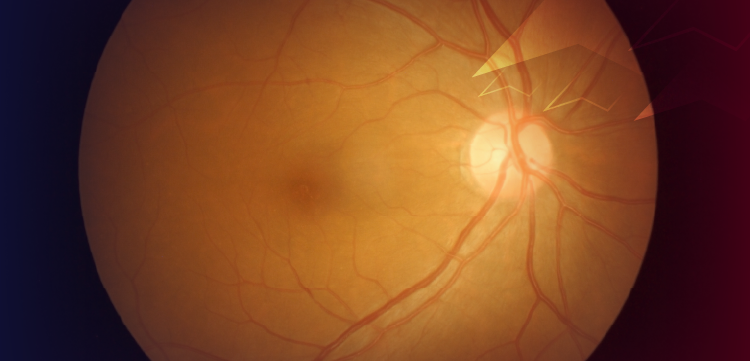






Investigators are conducting retinal gene therapy trials that offer potential new treatments for inherited causes of vision loss.
Investigators are conducting retinal gene therapy trials that offer potential new treatments for inherited causes of vision loss.

Research teams in various countries are pioneering different methods of data processing and deep-learning AI to create new models of care.

An international research team has shown that optogenetic therapy has helped to partially regain visual function in a patient with retinitis pigmentosa. This is a milestone towards a gene therapy that could restore vision.
Dr. Michael Mbagwu speaks on the highlights of his virtual 2021 ARVO presentation regarding the development of an algorithm tool that links patient imaging to their clinical data, specifically within the AAO IRIS Registry.
Dr. Daniel F. Kiernan discusses key findings of a clinical study analyzing the effect of dexamethasone intracameral drug-delivery suspension on macular thickness based on OCT testing following vitreoretinal surgery.
Dr Uwe Oberheide discusses the key findings of his virtual ARVO 2021 presentation on modelling of IOLs for patients with AMD by ray tracing.

Investigators found that a fluocinolone acetonide implant maintained good real-world vision levels in patients with diabetic macular oedema who had good baseline vision.

In a real-world study of patients with treatment-naïve and previously treated diabetic macular oedema, injection of intravitreal dexamethasone 0.7-mg implant provided effective disease control with initial and repeat injections, regardless of reinjection interval.

Topical eye drop treatments for the posterior segment would offer easier, less invasive options than those currently available. This would reduce the burden on both patients and their caregivers, increasing adherence and improving outcomes.
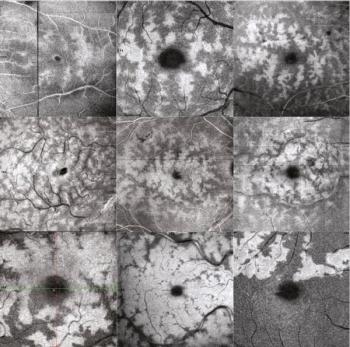
En-face OCT has advantages that make it very useful for characterising macular anatomy and pathologic features of various macular disorders.
Anat Loewenstein, MD, MHA, explores dual Ang-2/VEGF-A inhibition in the management of diabetic macular edema and exudative age-related macular degeneration.
Angiogenesis, Exudation, and Degeneration 2021 Virtual Symposium highlights and thoughts on current treatments options for DME and exudative AMD are discussed.
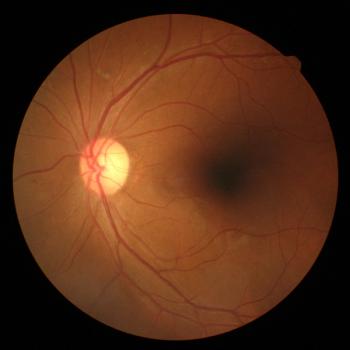
In the DRCR Retina Network Protocol V, which studied management strategies for eyes with centre-involving DMO and good visual acuity, the majority of eyes randomly assigned to initial observation completed the 2-year study without needing anti-VEGF therapy for vision loss and nearly one-third had spontaneous resolution of DMO.

Although the majority of patients experience benefit with brolucizumab for the treatment of nAMD without severe adverse events, the risk of retinal vasculitis and/or retinal vascular occlusion needs to be balanced with potential benefits.

Nurses and other allied healthcare professionals can safely and effectively deliver intravitreal steroid implants in a clean room setting, which has reduced patient waiting times.

Aleksandra Rachitskaya, MD, speaks on the current gaps in AMD treatment as well as ongoing retinal advancements to help address unmeet needs of patients.

Recent improvements in electroretinography are making the technique more accessible for general use. It has a wide range of clinical applications.
Anat Loewenstein, MD, provides an update on the latest developments in emerging therapies for the management of age-related macular degeneration (AMD) and wet AMD.
Joshua Mali, MD, discusses the three major risk factors for developing age-related macular degeneration (AMD).
Ian C. Han, MD, assistant professor in the Department of Ophthalmology and Visual Sciences, Institute for Vision Research, University of Iowa Hospital and Clinics, dives into the basics of age-related macular degeneration (AMD) and what patients need to know.

With NASA’s sights set on Mars, continued research into further understanding and mitigating spaceflight-associated neuro-ocular syndrome is of the utmost importance for astronaut health and space exploration.
Rishi P. Singh, MD, highlights various treatment options available for the management of patients with age-related macular degeneration, as well as the status of potential therapies.
Results of a study analysing cytokine levels in the aqueous humour and serum of patients with nonproliferative diabetic retinopathy with and without diabetic macular oedema support further research investigating transforming growth factor-β-induced Gene Human Clone 30 (BIGH3) as a potential biomarker for DMO.

Study found that YAG laser vitreolysis was less invasive than pars plana vitrectomy for patients with vitreous opacities.
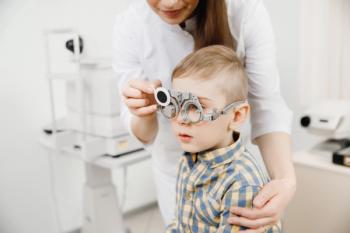
Community support is the most important factor in ascertaining effective treatments for paediatric eye diseases.