











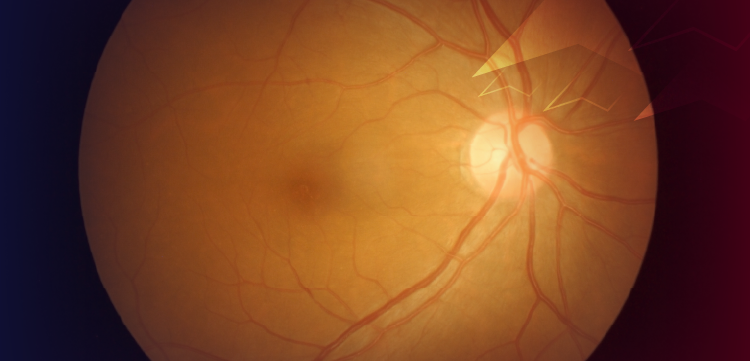






In this roundtable, members of the Ophthalmology Times Europe® Editorial Advisory Board consider the top challenges and opportunities that they anticipate will affect ophthalmology in Europe in 2021.
In this roundtable, members of the Ophthalmology Times Europe® Editorial Advisory Board consider the top challenges and opportunities that they anticipate will affect ophthalmology in Europe in 2021.
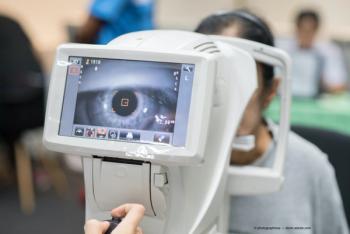
Bradley Smith, MD, presents at AAO 2020 on how fingolimod 0.5 mg, a first-line treatment for multiple sclerosis, may reduce both the number of relapses and disease progression in patients with relapsing-remitting MS as well as the incidence of uveitis.

A case series of 13 young patients with Charles Bonnet syndrome, which is characterised by visual hallucinations in individuals who are experiencing sight loss, showed that the patients all had inherited retinal diseases or congenital eye disorders but there was no link with visual dysfunction.

Rick Eiswirth, president and CEO of Alimera Sciences, provides an update on the company’s clinical trial that aims to evaluate its fluocinolone acetonide intravitreal implant 0.19 mg (Iluvien) as a baseline therapy for diabetic macular edema.
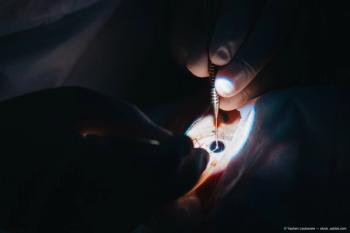
Tamer Mahmoud, MD, PhD, discusses autologous retinal transplant (ART) for macular holes, a procedure he developed, which is providing anatomic hole closure in the vast majority of cases as well as increases in visual acuity.

Josh Anderson, head of U.S. retina sales and marketing for Alcon, outlines what attendees will learn including product updates, new technologies, and practice management materials for ophthalmologists and their patients during the COVID-19 pandemic.

At AAO 2020, Fernando Arevalo, MD, PhD, details the use of anti-VEGF therapy for the treatment of retinal arteriolar macroaneurysms that are near the fovea.

COVID-19 has had a significant impact on the entire global community. As we look to the future to advance the provision of eyecare excellence, opportunities for innovation must be embraced and new, patient-centric ways of managing clinical practices adopted.
Dr Anna Stulova, fellow, Ophthalmology Department, Faculty of Medicine, Lomonosov Moscow State University, is among those recognised in this year’s program.

Dietary macular pigments, which can now be measured directly and accurately, are hugely important in optimising visual function, especially as we age.

To maintain treatment quality and patient and staff safety in the SARS-CoV-2 era, it is important to minimise clinic visits and maximise use of imaging modalities. In addition, extending treatment intervals with longer-acting agents is key to maximising safety and patients’ vision outcomes.

Photobiomodulation has been demonstrated to improve quality of vision in several patients suffering from dry AMD.

Novel monoclonal antibody can halt the growth of abnormal blood vessels

SS-OCT provides a clear view of the eye’s internal structures and any abnormalities, helping to differentiate benign from malignant lesions.

Recent international ophthalmic congresses have featured advocates for and against the need for complete fluid resolution when treating nAMD, with some ophthalmologists arguing for a zero-tolerance approach to the presence of fluid, and others claiming some residual fluid can be tolerated and may be helpful in some patients.
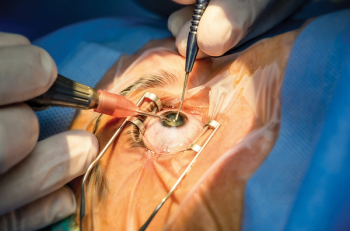
The one-piece, small-aperture IOL IC-8 was found in a retrospective comparative review of studies to enhance vision at all distances, with improved visual acuities and a broad range of continuous functional vision.

A UK health data research hub containing vast numbers of fundus and OCT images opens the door to improved screening and diagnoses of eye diseases and even ‘oculomic’ services for systemic health.



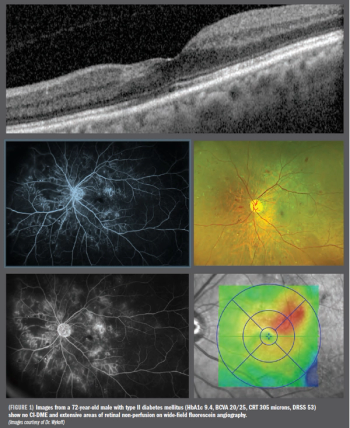
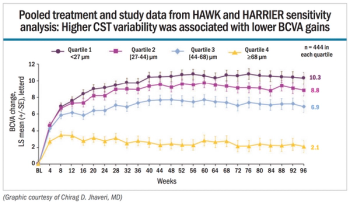
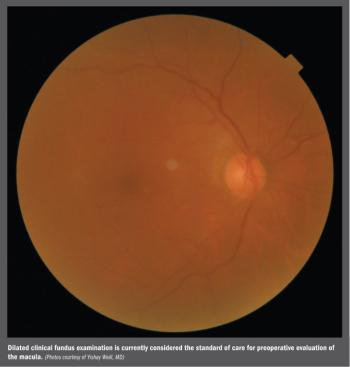
Study shows routine use may improve patient management, guide procedure planning
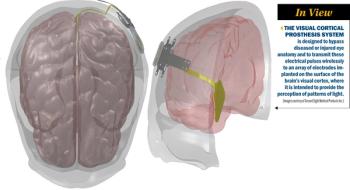
Visual cortical prosthesis intended to create artificial form of useful vision for blind individuals