









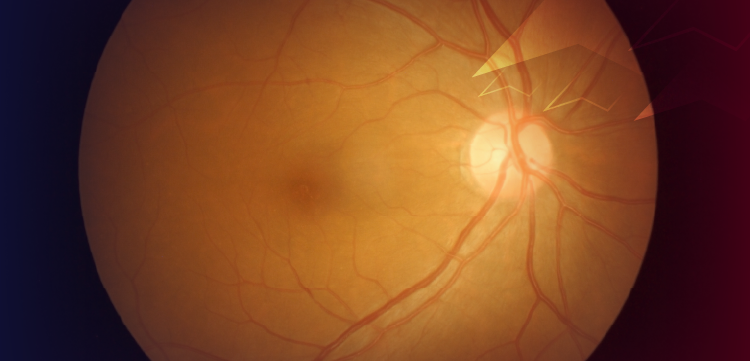






Digital devices may be used as a visual rehabilitation technique for low-vision AMD patients, according to a paper featured in the journal Eye.
Digital devices may be used as a visual rehabilitation technique for low-vision AMD patients, according to a paper featured in the journal Eye.
Macular thickness significantly increases up to six months after uncomplicated cataract surgery, according to an investigation featured in the journal Eye.
Increased oral supplementation of carotenoids (lutein and zeaxanthin) and omega-3 fatty acids, found in fish oil, does not reduce the risk of AMD progression further to the original AREDS formulation, claims the latest results of the Age-Related Eye Disease Study (AREDS2).
Iluvien has been used to treat a diabetic macular oedema (DME) patient in the UK since the product became commercially available, it was revealed in a press release this week.
Iluvien, an intravitreal implant, is now available as a treatment for chronic diabetic macular oedema (DME) in the UK.
Parkinsons disease (PD) is associated with retinal nerve fibre layer (RNFL) loss and retinal thinning and can be detected by Fourier-domain OCT, claims a new study.
Focal photocoagulation may be a less invasive method for the treatment of microaneurysms, according to a paper published in the journal Retina.
Ranibizumab has been recommended for use within the NHS in England and Wales to treat macular oedema (ME) secondary to retinal vein occlusion (RVO).
Intravitreal bevacizumab is not recommended for the treatment of new onset Nonarteritic Anterior Ischemic Optic Neuropathy (NAION).
Intravitreal bevacizumab is well tolerated and causes the regression of abnormal diabetic neovascularization, according to recently published data.
Unoprostone will begin patient enrolment for the Phase III clinical study for the treatment of retinitis pigmentosa (RP), claims the latest press release.
Low-fluence photodynamic therapy (PDT) decreases subfoveal choroidal thickness (SFCT) in central serous chorioretinopathy (CSC), states a paper in the journal Eye.
Oral drug fenretinide has potential for the treatment of geographic atrophy (GA), but further studies are required.
Duration of disease should be considered when offering vein occlusion patient treatment
Retinal prosthesis systems (RPS) enable patients with retinal dystrophies to identify letters and words, confirms a new study.
Scanning laser ophthalmoscopy with a lateral confocal aperture could highlight subclinical drusen and aid in the progression of monitoring in AMD patients, claims the latest paper in the British Journal of Ophthalmology.
Volume and area changes in retinal pigment epithelial detachments (PEDs) could indicate the need for retreatment in eyes undergoing SD-OCT guided anti-VEGF therapy.
Monthly intravitreal aflibercept significantly improves visual acuity (VA) in patients with macular oedema secondary to central retinal vein occlusion (CRVO), according to the latest phase of the COPERNICUS study.
Bevacizumab could play a role in treating Coats' disease, claims a recent study.
Indocyanine green (ICG) enhanced transpupillary thermotherapy (TTT) in combination with ophthalmic artery chemosurgery can effectively treat retinoblastoma refractory without ocular side effects, claims a study.
Anti-VEGF therapy doesn?t not significantly affect visual acuity and metamorphopsia in patients treated for retinal pigment epithelium tears in eyes, according to a paper featured in Retina.
Optos is urging skiers to ensure they take care of their eyesight while on the slopes this winter, according to their latest press release.
Ozurdex could have a beneficial effect on the visual prognosis in branch retinal vein occlusion (BRVO), reveals a study in Eye.
Adalimumab is an effective treatment for patients with active non-infectious uveitis, according to a recent investigation.
Microperimetry may provide additional information on macula function that is not available using visual acuity data.