














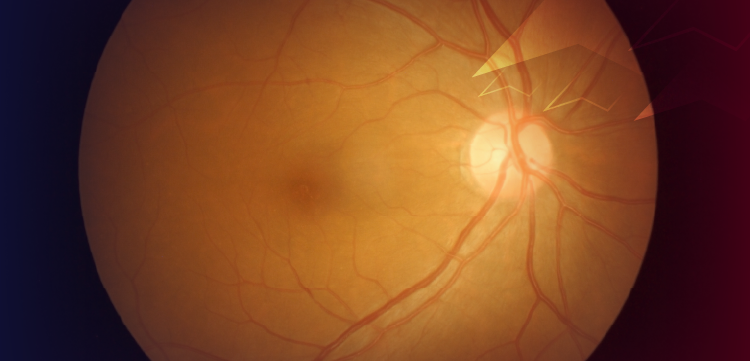






At the ASRS 39th Annual Scientific Meeting, Dr Yoshihiro Yonekawa reported that the prevalence of endophthalmitis following MIGS is similar to the prevalence rates of endophthalmitis after other incisional glaucoma surgeries.
At the ASRS 39th Annual Scientific Meeting, Dr Yoshihiro Yonekawa reported that the prevalence of endophthalmitis following MIGS is similar to the prevalence rates of endophthalmitis after other incisional glaucoma surgeries.
Dr Rishi Singh reports on the pooled data from the VISTA and VIVID clinical trials on the use of intravitreal aflibercept injections (IAI) to treat diabetic macular oedema at the ASRS 39th Annual Scientific Meeting.
Dr Caroline Baumal provides an overview of the efficacy, safety and durability of faricimab in diabetic macular oedema (DMO) at ASRS 2021.

At the ASRS 39th Annual Scientific Meeting, Dr W. Lloyd Clark discusses retinal nonperfusion and leakage areas when managing patients with nonproliferative diabetic retinopathy in context of the results of the PANORAMA study.

The EIDON Ultra-Widefield Lens module from iCare USA has received 510(k) approval from the FDA for distribution in the US.
Swept-source optical coherence tomography angiography can detect eyes at risk of developing exudative disease.
Trial results indicate that retinal cell injections improve vision in certain retinitis pigmentosa patients.

American Society of Retina Specialists (ASRS) meeting offers scientific sessions, symposia, discussion groups, opportunities for attendees.
Subtle changes in the retina, optic nerve and visual processing system may reveal early signs of Alzheimer’s disease and enable prompt initiation of treatment.

Scanning laser ophthalmoscopy offers improved view of posterior segment.

A post-conference guide for ophthalmologists after the conclusion of EURETINA 2021.

Development of new animal model enhances study of genetic mutations.

Prof Tunde Peto discusses her presentation on providing the best virtual care for patients with diabetic eye disease at EURETINA 2021.

During a presentation at the EURETINA 2021 Virtual Congress, Prof. Ben Burton detailed how dry AMD patients treated with photobiomodulation therapy have seen improvements in best-corrected visual acuity 9 months after treatment.

Health systems are challenged to provide appropriate care for the ever-increasing number of patients with diabetes and its complications, such as diabetic retinopathy and diabetic macular oedema.
During a presentation at the EURETINA 2021 Virtual Congress, Dr Daniel Jones discussed GA and emphasized the need for additional study to gain a better understanding of the burden experienced by patients.

In a presentation at the EURETINA 2021 Virtual Congress, Dr Cristina Cristian noted that an injection of brolucizumab treatment in patients with neovascular age-related macular degeneration led to a median improvement in visual acuity (VA) of 10.5 letters and the drug was well-tolerated.

Dr Ramin Tadayoni discusses the myopia panel at the EURETINA 2021 virtual meeting.
Dr Grazia Pertile discusses the highlights of her presentations on the management of retinal folds after retinal detachment and the role of the anterior vitreous as a cause of recurrent retinal detachment.

During a presentation at the EURETINA 2021 Virtual Congress, Dr Anat Loewenstein discussed how artificial intelligence can optimize optical coherence tomography.

During a presentation at the EURETINA 2021 Virtual Congress, Dr José-Alain Sahel explains that optogenetics involves the use of artificial photoreceptors from specific retinal cells to restore vision by transferring a gene that encodes for a light-sensitive protein that causes neuronal cells to respond to light stimulation.

Dr Javier Zarranz-Ventura discusses the key highlights from his presentation on a clinical investigation of suitable naïve versus pretreated DMO patients, and what it means for future research.

Prof Carel B. Hoyng discusses his presenation regarding macula dystrophies, including Stargardt disease, Best disease, X-linked retinoschisis, and the peripherin-2 (PRPH2) gene.
Dr Jennifer Sun explores the question of whether ophthalmologists should be using anti-VEGF agents to treat patients with nonproliferative diabetic retinopathy (NPDR).
Professor Quan Dong Nguyen speaks on the highlights of his presentation regarding new biological treatments of posterior uveitis.