

Home testing technology is proving to be a key advancement in monitoring and screening glaucoma patients.
Home testing technology is proving to be a key advancement in monitoring and screening glaucoma patients.

Talk of lens selection and patient satisfaction dominated discussion during the Advanced IOLs Symposium; cost vs. benefit analysis emerges as a theme throughout the congress.

New strategies are considered for obtaining information from visual assessments while ensuring compliance from paediatric patients.

Results from Phase 3 trials of bispecific antibody faricimab demonstrate that it is more durable than currently available agents, and it has a good safety profile.


As the world comes together to shine a global spotlight on blindness and vision impairment on World Sight Day, several global organizations and companies are stepping up to increase awareness of eye health, including the importance of regular examinations by an ophthalmologist or optometrist.

A review of studies, presentations and discussions at ASRS 2021 in San Antonio, Texas.
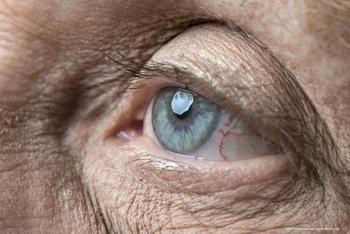
At ASRS 2021, Dr David Boyer reported that pegcetacoplan used to treat geographic atrophy and administered in monthly or every-other-month regimens was well tolerated in patients in the phase 3 DERBY and OAKS studies.

Dr Arshad Khanani reported at ASRS 2021 that the Port Delivery System with ranibizumab, an investigational product that continuously delivers ranibizumab intravitreally, achieved results similar to those in patients treated with monthly ranibizumab injections for nAMD.
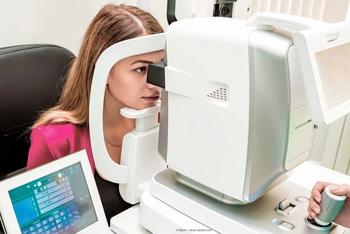
At ASRS 2021 in San Antonio, TX, Dr Richard B. Rosen reported that clinical optical coherence tomography (OCT) can image and measure macular surface macrophage cells.

During the ASRS Annual Scientific Meeting, Dr Sunir Garg reported that the risk of presumed infectious endophthalmitis following administration of anti-VEGF injections does not increase and universal masking may actually decrease the risk of culture-positive endophthalmitis.

At the ASRS 39th Annual Scientific Meeting, Dr Yoshihiro Yonekawa reported that the prevalence of endophthalmitis following MIGS is similar to the prevalence rates of endophthalmitis after other incisional glaucoma surgeries.
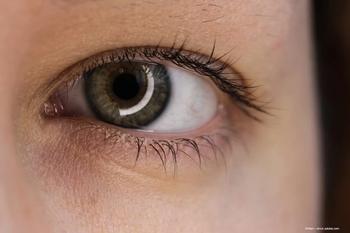
Dr Rishi Singh reports on the pooled data from the VISTA and VIVID clinical trials on the use of intravitreal aflibercept injections (IAI) to treat diabetic macular oedema at the ASRS 39th Annual Scientific Meeting.

At the ASRS 39th Annual Scientific Meeting, Dr W. Lloyd Clark discusses retinal nonperfusion and leakage areas when managing patients with nonproliferative diabetic retinopathy in context of the results of the PANORAMA study.
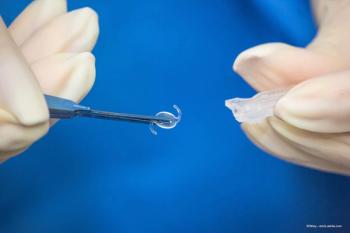
There is no significant difference between IOL replacement and rescue in terms of postoperative visual and surgical outcomes for eyes undergoing secondary IOL scleral fixation.

The EIDON Ultra-Widefield Lens module from iCare USA has received 510(k) approval from the FDA for distribution in the US.

Swept-source optical coherence tomography angiography can detect eyes at risk of developing exudative disease.

Evidence from clinical trials and real-world situations demonstrates the effectiveness and convenience of intraocular drugs to control postoperative inflammation.

Trial results indicate that retinal cell injections improve vision in certain retinitis pigmentosa patients.

Investigators at Dartmouth College have found that eye contact during a conversation makes the discussion more appealing to its participants.

Ex vivo experiment identifies potential benefit for supplementary oxygen.

The white cane receives assistive updates to guide visually impaired users to destinations, making indoor navigation in unfamiliar locations easier and safer.
Thinning of inner plexiform sub-layers can help differentiate glaucomatous from healthy eyes.

A new IOL combines the advantages of diffractive multifocal and extended-depth-of-focus lenses, providing a natural range of vision.

American Society of Retina Specialists (ASRS) meeting offers scientific sessions, symposia, discussion groups, opportunities for attendees.

The eyeglasses were reportedly designed to help the wearer reach enlightenment and drive away evil, according to Sotheby’s London, which will host the auction next month.
Exploring subtleties helps ophthalmologists understand postoperative surprises.

Subtle changes in the retina, optic nerve and visual processing system may reveal early signs of Alzheimer’s disease and enable prompt initiation of treatment.

A recent prospective study analysed the relationship between corneo-scleral geometry and the axial length of the eye to develop preliminary prediction models of the axial length of the eye based on clinical data.

The 39th Congress of the European Society for Cataract and Refractive Surgery (ESCRS) will meet at RAI Congress Centre in Amsterdam, the Netherlands, from 8–11 October 2021. The Congress will also be held virtually, making the chance to participate in some capacity a reality for all.