

Ultrasonic retinal prosthesis has been achieved by a research group at UCLA. It is a step towards a non-invasive retinal prosthesis that works without invasive eye surgery.
Ultrasonic retinal prosthesis has been achieved by a research group at UCLA. It is a step towards a non-invasive retinal prosthesis that works without invasive eye surgery.

While investigators have found a link between dry eye and depression, the exact reasons behind the link are not immediately known.
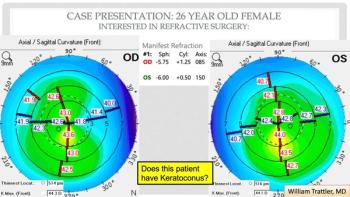
A team of investigators has found that the eye disease is more prevalent than first thought.

Investigators find that oestradiol drops can ease signs and symptoms for 3 months.

Glaukos Corp’s iLink therapy for the treatment of keratoconus consists of novel single-use drug formulations that are bio-activated by proprietary systems through the delivery of ultraviolet light to the cornea to induce corneal cross-linking designed to strengthen, stabilise and reshape the cornea.

Retinal changes seen in suspected transient ischaemic attacks are not helpful for predicting ischaemic events.

According to Dr Claudia Perez-Straziota, persistent epithelial defects do not have to live up to their name—they can be healed.

A team of investigators found that sigma 1 receptor, which is known to protect cells from stress, could turn out to be key to the function and survival of the neurons most impacted by glaucoma.

Russian bombs on Wednesday struck a hospital in Mariupol, Ukraine, damaging several buildings, including an ophthalmology department. Elsewhere, physicians are participating in relief efforts.
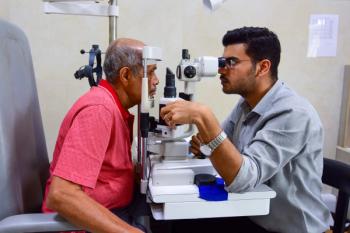
Many low- and middle-income countries lack resources for managing eye health. A pilot project aims to reduce the number of people going blind from untreated glaucoma by raising awareness and increasing engagement with screening and follow-up.

New World Medical notes that the intuitively designed Streamline features ClickPulse technology that targets the eye’s conventional outflow pathway.
Compounded medications are playing a central role in the process.
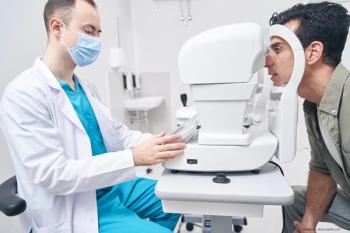
Recent innovations in glaucoma have helped clinicians and patients manage the condition more effectively.
The glaucoma toolbox is expanding to include laser, drug delivery systems and minimally invasive glaucoma surgery.

The companies note that the partnership will propel Ray Therapeutics’ lead optogenetics gene therapy to Phase 1-2 clinical trials.


The healthcare sector has high greenhouse gas emissions, to which ophthalmology is a significant contributor. Reducing waste, reusing instruments and medication and increasing our use of telemedicine can all contribute to reducing the carbon footprint of our specialty.

Utilizing new technology, surgeons can be 20 to 40 times more precise.
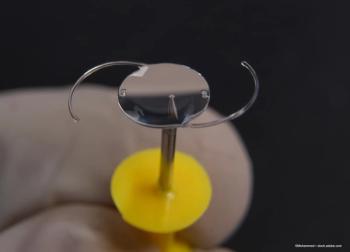
Researchers compared two novel lens designs using data obtained from 19 investigational sites in Australia, Canada, Spain and the UK.

Results from the study were presented by Dr Russell Tait, CEO of PolyActiva, at the Glaucoma 360 New Horizons Forum in San Francisco, California.
Alimera Sciences, Inc. announces statistically significant improvements in best corrected visual acuity, central subfield thickness and treatment burden for patients with diabetic macular oedema.
Loteprednol etabonate suspension 0.25% demonstrates anti-inflammatory action and produces significant improvement in conjunctival hyperaemia and ocular discomfort.
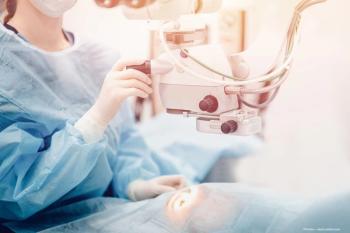
Prompt, careful use of laser-based treatment minimises postoperative adverse effects.
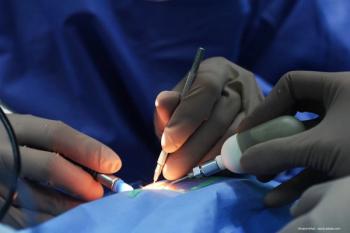
The Malyugin Ring 2.0 simplifies challenging cases of small pupils with zonulopathy by both stabilising the capsular bag and dilating the pupil.
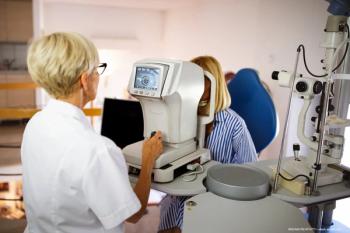
Researchers know that parts of the retina are considered as biomarkers for Alzheimer disease, but the team from Otago’s Dunedin Multidisciplinary Health and Development Research Unit in New Zealand have been investigating the retina’s potential to indicate cognitive change earlier in life.

Kriya Therapeutics company recently took the wraps off an exclusive agreement with the Medical University of South Carolina (MUSC) Foundation for Research Development to license next generation complement-targeted gene therapies for the treatment of geographic atrophy and other ocular diseases.

Novel treatment reduces treatment burden and improves outcomes.
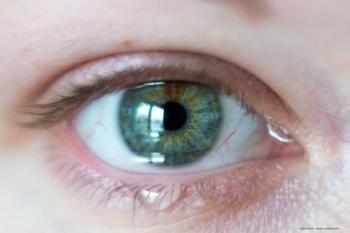
Intracanicular insert is the first physician-administered, preservative-free method.

A brief overview of findings presented at the 2022 Angiogenesis, Exudation and Degeneration meeting hosted by Bascom Palmer.

Investigators in the Netherlands have developed an RNA therapy to halt the progression of Stargardt disease.