

Recent literature review reveals dearth of data, highlights need for more research.
Recent literature review reveals dearth of data, highlights need for more research.

Electronic health records may be the future of practice management.

Eyes with larger fluctuations in central subfield thickness (CST) had worse VA compared with eyes with the fewest CST fluctuations in both protocols, according to investigators.

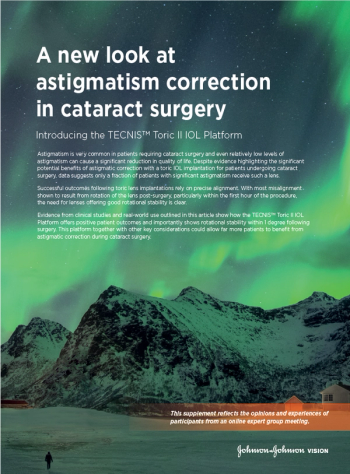
Giving due consideration to preoperative marking and the surgical technique in toric IOL implantation, as well as being diligent about reviewing postoperative results, can improve patient outcomes whilst minimising the chance of errors.

Researchers at the University of Virginia School of Medicine have made a discovery linking lupus, a potentially debilitating autoimmune disorder, and macular degeneration, a leading cause of blindness.

Current options, challenges in developing novel therapies.

According to investigators, the virtual reality option could overcome hurdles associated with reliance on a physical course.

Assessment of renal function could help explain the treatment response for patients with diabetic macular oedema.

Partial topography-guided surface ablation, combined with corneal collagen crosslinking when visual acuity is still quite good, optimises prognosis for the patient with keratoconus.
Impairment of corneal sensory innervation causes reduction of both protective reflexes and trophic neuromodulators that are essential for the vitality, metabolism, and wound healing of the ocular surface.
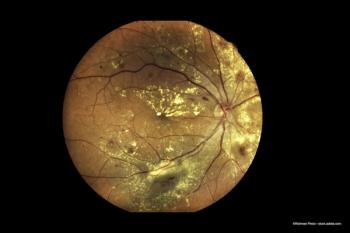
SD-OCT is providing reproducible, high-quality, registered images to assess the treatment response in macular disease.
Patients can benefit from short-term, on-label treatment with a novel loteprednol formulation.

The agreement includes Europe, Commonwealth of Independent States countries, China, India, parts of Latin America and the Oceania countries.
Several recent cases demonstrate how advancements in planning, imaging and surgical approaches can enable positive outcomes in very young patients.
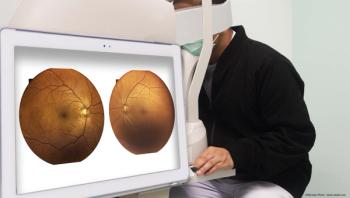
Teleretinal screening programs prove a cost-effective option in preventing blindness related to diabetic retinopathy.

Imaging study revealed specific retinal and choroidal changes associated with Parkinson's disease.


Corneal collagen crosslinking was found to stabilise the cornea, and in some cases improve vision and keratometry values, in children and young adults.
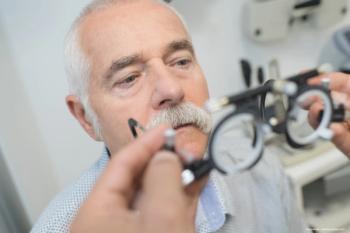
The VIVID study focuses on three novel topical ophthalmic formulations under investigation for the treatment of presbyopia.
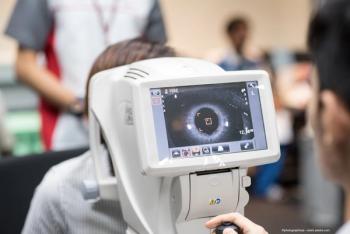
Innovative research project aims to change the future of diagnostic clinics, improving access and efficiency while reducing cost and viral exposure.

Four members of the Ophthalmology Times Europe® Editorial Advisory Board consider the challenges and opportunities that lie ahead in Europe in 2022.

Benefits include better visualisation of ciliary processes and avoidance of tissue damage.

Polygenic risk score allows multiple variants to be tested simultaneously.

Underlying autoimmune disease alters uveitis therapy.
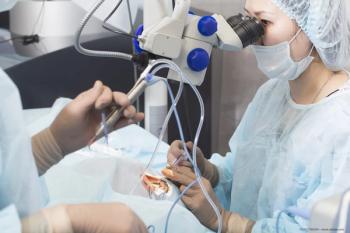
Surgical options facilitate increased durability for patients with retinal degeneration.
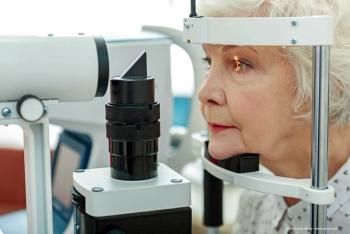
Confronting issues unique to aging may lead to better outcomes.

This three-part feature discusses tips for success when getting started with toric IOLs. Part 2 tackles calculating toric IOL sphere and cylinder power; though it can seem daunting when treating astigmatism, the process can be simplified with a few key considerations.

A gel stent allows for less invasive subconjunctival procedures and an easier recovery course than traditional forms of minimally invasive glaucoma surgery.

The Children’s Vision Equity Alliance was created to improve access in children’s vision and eye health, working to advance equity in children’s vision and eye health through education, policies and partnerships.