
It is widely accepted that patient selection is the key to success with premium IOLs. However, with care, premium IOLs can be implemented in challenging cases.
It is widely accepted that patient selection is the key to success with premium IOLs. However, with care, premium IOLs can be implemented in challenging cases.

PDUFA action date of October 30, 2021, is assigned for investigational therapy with a proposed indication of treatment of macular edema associated with uveitis.

Careful study of ocular anatomy can help surgeons avoid problems related to glaucoma procedures and achieve better results for patients.

Whilst endophthalmitis following cataract surgery can lead to serious vision outcomes, there are ways of minimising the risk of it occurring whilst also being mindful of the need to prescribe antibiotics in a way that does not worsen antimicrobial resistance.

Investigators are conducting retinal gene therapy trials that offer potential new treatments for inherited causes of vision loss.

Research teams in various countries are pioneering different methods of data processing and deep-learning AI to create new models of care.

An international research team has shown that optogenetic therapy has helped to partially regain visual function in a patient with retinitis pigmentosa. This is a milestone towards a gene therapy that could restore vision.

Vyluma Inc. will focus on the development and commercialization of therapies to treat ophthalmic diseases, including paediatric myopia.

After a US District judge rules against request for preliminary injunction, Johnson & Johnson Vision moves forward with litigation in several countries, including the United States, to resolve intellectual property disputes against Alcon.

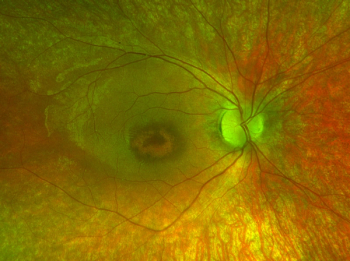
In a presentation at ARVO, Friederike Kortuem, MD, MSc, explains that treatment with voretigene neparvovec-rzyl led to a short-term change in the foveal morphology in a patient with visual impairment that included nyctalopia and decreased visual acuity in early childhood.

Joseph Grieco, PhD, notes that treatment fills a gap for patients who are unresponsive to the standard treatments for noninfectious keratitis.
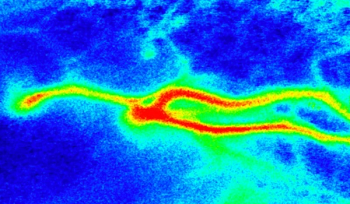
Non-invasive ocular blood flow measurement using laser speckle flowgraphy may be a new indicator of shock-related organ damage, investigators report.

During a presentation at the ARVO virtual meeting, Lloyd Paul Aiello, MD, PhD, explains that a key hurdle for diabetic retinopathy is the lack of patient awareness, which is a substantial contributor to non-adherence to eye care guidelines and poor outcomes.

During an ARVO presentation, Paul Yang, MD, PhD, explained that in a clinical trial, investigators used an adeno-associated viral vector to deliver a normal functioning copy of the RPGR gene via subretinal injection.

Customised myopic LASIK using automated ray tracing optimisation has the potential to offer improved and more predictable outcomes, a study shows.
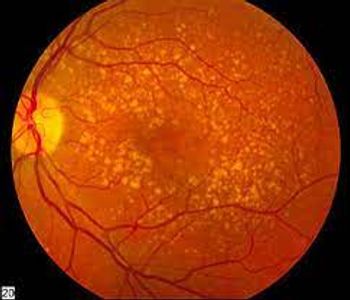
EYS809, a non-viral gene therapy sustained drug-delivery product that delivers anti-vascular endothelial growth factor to the eye, may replace the need for repeated intravitreal anti-VEGF injections and improve vision in patients diagnosed with wet age-related macular degeneration.

Studies show that corneal crosslinking could be a beneficial treatment in paediatric patients with keratoconus.

Robyn Guymer, PhD, MBBS, highlights the latest trial results for faricimab, the first bispecific antibody designed for intraocular use in treating patients with neovascular age-related macular degeneration.

According to Sunil Srivastava, MD, optical coherence tomography characteristics may be predictive of the efficacy of the injections.

During ARVO’s 2021 virtual annual meeting, John Wells, MD, presented efficacy, durability, and safety findings from phase 3 YOSEMITE and RHINE trials.

Bryce Buchowicz, MD, outlines roadblocks to timely diagnosis of central retinal artery occlusion and treatment with tissue plasminogen activator during a virtual presentation at ARVO.

During a presentation at ARVO, Jessica Liu explained that patients with BRVO or CRVO with any lapse in treatment of 3 months or longer are at risk for poorer outcomes.

Investigators review changes in ocular anterior segment blood flow and temperature after treatment of patients with meibomian gland dysfunction.

Gene therapies are being investigated for multiple inherited retinal diseases and the progress in this field has implications for patient care.

Topography-guided treatments for irregular corneas can improve patients’ best corrected visual acuity. The technique is easy to plan and perform, supported by software to do the calculations.

A cost-utility analysis found that concurrent phacoemulsification and minimally invasive glaucoma surgery using trabecular microbypass stents is cost-effective for treating mild to moderate open-angle glaucoma, compared with cataract surgery alone.

Many genes and polymorphisms have been identified as being associated with glaucoma, predicting progression, identifying those at increased risk and allowing treatment to be optimised.

The rates of postoperative myopic progression are the lowest with the SMILE procedure compared with PRK and LASIK, regardless of the degree of myopia.

Investigators found that a fluocinolone acetonide implant maintained good real-world vision levels in patients with diabetic macular oedema who had good baseline vision.