
Study found that YAG laser vitreolysis was less invasive than pars plana vitrectomy for patients with vitreous opacities.
Study found that YAG laser vitreolysis was less invasive than pars plana vitrectomy for patients with vitreous opacities.
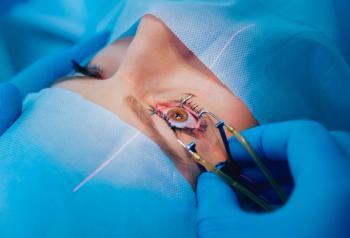
Presbyopia can be treated in emmetropic, myopic and hyperopic patients with refractive errors between +5.75 and -9.00 D using corneal non-linear aspheric ablation profiles to increase the depth of field in both eyes, in combination with micro-monovision. Patient satisfaction with this approach is high.

Community support is the most important factor in ascertaining effective treatments for paediatric eye diseases.

Diabetes mellitus, which is a common chronic disease in children, can lead to significant eye morbidities with long-lasting effects, including diabetic retinopathy. Treatment should be tailored to the individual patient.
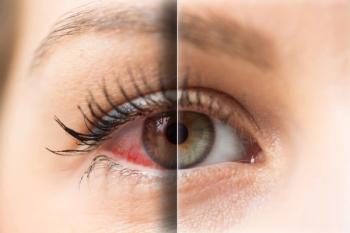
The vicious cycle theory is a new way of understanding dry eye disease and may help improve prevention and treatment strategies.
Faricimab is the focus of the YOSEMITE and RHINE studies, which investigators say show that the investigational bispecific antibody has the potential to offer lasting vision improvements for patients with diabetic macular oedema.

A cluster of COVID-19 positive patients developed endophthalmitis, and investigators are searching for a link.

Prospective randomised trial demonstrates clinical equivalence of biosimilar and reference ranibizumab

The principle of pinhole optics at work in the IC-8 IOL overcomes visual disturbances associated with corneal disease and provides a functional range of vision.
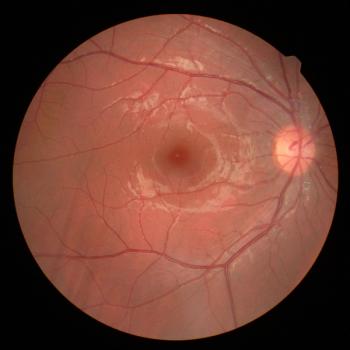
Good early adherence to label regimens can make a difference, yielding vision outcomes approaching those in clinical trials, emerging real-world studies of anti-VEGF for DMO suggest.
Poorly focused YAG shots lead irrevocably to a permanent defect in the IOL material and thus to possible effects on the quality of vision with straylight or glare. In a recent study, the differing amounts of damage that Nd:YAG causes in a range of hydrophilic and hydrophobic acrylic lens materials was assessed.

As OCT-A devices become faster, the algorithms advance and the instrument costs decrease, more widespread utilisation in retina practices is likely.


The Malyugin ring 2.0 expands the small pupil safely and effectively to enable excellent intraoperative visualisation. It has a good safety record and is easier to use than alternative methods.

In this roundtable, members of the Ophthalmology Times Europe® Editorial Advisory Board consider the top challenges and opportunities that they anticipate will affect ophthalmology in Europe in 2021.

During AAO 2020, Neal H. Shorstein, MD, explains how physicians at Kaiser Permanente have a streamlined regimen using a prophylactic drop-free drug before cataract surgery for more than a decade.
Bradley Smith, MD, presents at AAO 2020 on how fingolimod 0.5 mg, a first-line treatment for multiple sclerosis, may reduce both the number of relapses and disease progression in patients with relapsing-remitting MS as well as the incidence of uveitis.

A case series of 13 young patients with Charles Bonnet syndrome, which is characterised by visual hallucinations in individuals who are experiencing sight loss, showed that the patients all had inherited retinal diseases or congenital eye disorders but there was no link with visual dysfunction.

Tamer Mahmoud, MD, PhD, discusses autologous retinal transplant (ART) for macular holes, a procedure he developed, which is providing anatomic hole closure in the vast majority of cases as well as increases in visual acuity.

During AAO 2020, Kathleeen B. Digre, MD, details how a headache in conjunction with visual loss is a scenario that requires an in-depth examination, including evaluation of the visual fields, pupils, and fundus to gather clues to the diagnosis.

Amy K. Hutchinson, MD, explains that while myopia has been occurring at epidemic rates worldwide, research has found that the use of orthokeratology and multifocal contact lenses can provide clinically meaningful reductions in myopia progression.
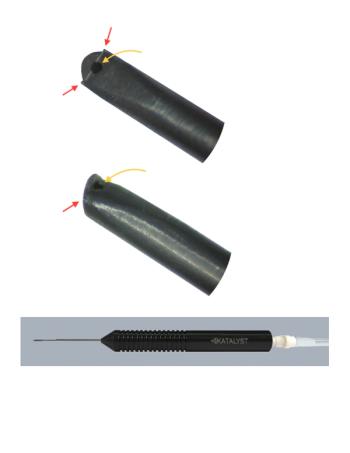
During Day 1 of AAO 2020, Carl Awh, MD, discusses the Micro-Vacuum Pick, a device for peeling internal limiting membranes that's providing vitreoretinal surgeons an alternative to forceps during surgeries.

At AAO 2020, Fernando Arevalo, MD, PhD, details the use of anti-VEGF therapy for the treatment of retinal arteriolar macroaneurysms that are near the fovea.

COVID-19 has had a significant impact on the entire global community. As we look to the future to advance the provision of eyecare excellence, opportunities for innovation must be embraced and new, patient-centric ways of managing clinical practices adopted.
Dr Anna Stulova, fellow, Ophthalmology Department, Faculty of Medicine, Lomonosov Moscow State University, is among those recognised in this year’s program.

Dietary macular pigments, which can now be measured directly and accurately, are hugely important in optimising visual function, especially as we age.

A multifocal corneo-scleral contact lens that can correct presbyopia in irregular corneas has undergone a small pilot study. Complete visual rehabilitation was achieved along with a high degree of patient satisfaction.

To maintain treatment quality and patient and staff safety in the SARS-CoV-2 era, it is important to minimise clinic visits and maximise use of imaging modalities. In addition, extending treatment intervals with longer-acting agents is key to maximising safety and patients’ vision outcomes.

Photobiomodulation has been demonstrated to improve quality of vision in several patients suffering from dry AMD.

Novel monoclonal antibody can halt the growth of abnormal blood vessels