





Retina
Latest News
Advertisement
Latest Videos






CME Content
















Advertisement
More News

Three recipients will each receive up to $10,000 toward their research on a 1-year project that can go toward additional training in specialty equipment or research methodologies.

Ultra-widefield imaging may be a promising technology for assessing larger areas of the retinal vasculature to uncover retinal changes in Alzheimer’s disease, according to investigators.

Ocular involvement in IBD is a rare extraintestinal manifestation, but may be critical because of its potential sight-threatening complications if not treated promptly and accurately, according to researchers.
The research team reported a few differences in patients that included a decreased mean vessel density at the deep vascular complex of the macula, a decreased mean subfoveal choroidal thickness, and an increase in the size of the foveal avascular zone.

Best-corrected visual acuity and minimum linear diameter before surgery may be indicators for anatomical success.
Resection techniques for choroidal tumours are based on modern vitreoretinal surgical techniques, which allow for the treatment of more challenging cases.

Findings may help pediatricians and ophthalmologists to determine the appropriate timing of examinations and treatment.

Pegcetacoplan is the only GA treatment to demonstrate increased effects over 24 months across a broad patient population.
Understanding vitreomacular interface diseases is key to treatment.

Members of the Ophthalmology Times Europe® Editorial Advisory Board were asked to predict developments in their ophthalmic specialties and interests for 2023. A focus is our ageing population, while efficiency and productivity are also on their minds. The board members agree that one of the major challenges in the year to come will be the large number of patients awaiting diagnosis and treatment, which is only going to increase with the rising average life expectancy worldwide.

A recent survey of retinal clinic patients reveals a lack of awareness of the risks and safety issues associated with stem cell therapies.

The survey addressed topics that would facilitate a better understanding of the awareness of retina specialists regarding this relative new form of treatment in ophthalmology.

The funding will give a boost to the development of the company's novel photo-crosslinked EyeLief, EyeLief-SD, and OcuLie biodegradable drug-delivery technologies.
Giving patients access to new treatments and information on changing their lifestyle habits could result in major steps towards minimising or even preventing geographic atrophy.

Axial length growth is a sensitive means of assessing myopia progression in children. Drops and special lenses are options for inhibiting excessive axial length growth.

Inflammation is par for the course in ocular gene therapy; preventing it should be the goal because once it develops, treatment can be difficult.
Combining ECP with vitrectomy can reduce medication use following the procedure and in some cases avoid the need for further surgery.
An end-of-week review of what happened in ophthalmology from 29 October to 3 November 2022.
A global survey of retinal experts assessed their perceptions of evolving clinical practice in the Covid-19 era, focusing on digital teleophthalmology, home monitoring and decentralised patient care.
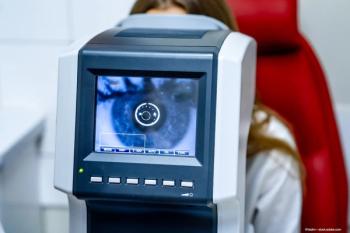
A small study demonstrates that high-resolution imaging with adaptive optics may be a useful method of assessing integrity of the cone mosaic following macular hole repair.
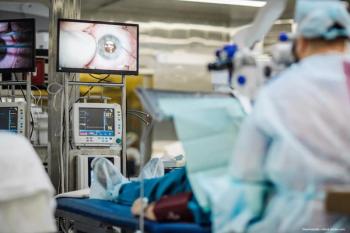
Investigators evaluated VA outcomes after cataract surgery and the factors associated with good visual outcomes in a population of patients with type 2 diabetes.
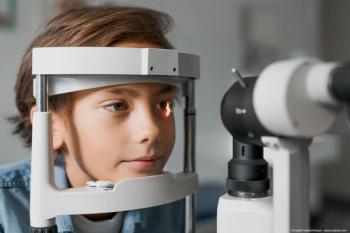
The COVID-19 pandemic has led to greater comfort with robotic telepresence in eye screenings.
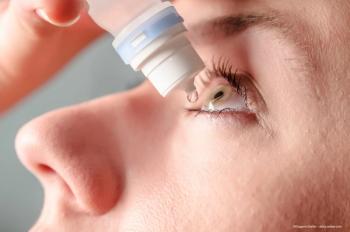
Investigators report that a gel-forming sustained-delivery eye drop containing sunitinib can provide increased intraocular absorption of the drug while protecting retinal cells.
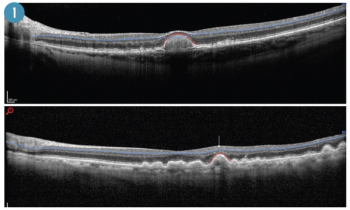
Study images showed that large drusen compressed the inner macula and distorted the tissue architecture, and geographic atrophy resulted in posterior prolapse of the inner retinal layers.
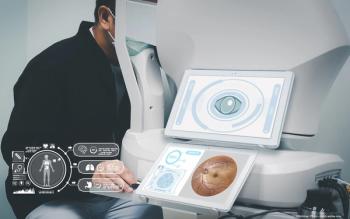
AI and teleophthalmology both show very high level of agreement with in-person evaluations, although further studies are needed to reduce the number of ungradable images.
Advertisement
Advertisement