
Specialists discuss diagnostic technologies, treatment strategies and research that are improving outcomes for young patients.
Specialists discuss diagnostic technologies, treatment strategies and research that are improving outcomes for young patients.

A neuroprotective investigational candidate for optic neuritis (ON) has received Priority Medicines (PRIME) designation from the European Medicines Agency (EMA).

Q1 2026 eye-care roundup: first dual-agent presbyopia drop, new EDOF IOL, wet AMD phase 3 win, and gene-therapy advances.Major ophthalmic events in the first quarter of 2026 included treatments for presbyopia, age-related macular degeneration (AMD), dry eye, glaucoma, corneal dystrophy, geographic atrophy, and a new intraocular lens (IOL), among others.1 Key FDA approvals & regulatory actions during Q1 2026) Yuvezzi 2.75%/0.1% (carbachol/brimonidine, Tenpoint Therapeutics Ltd.) was approved as the first dual-agent eye drop designed to treat presbyopia in adults. The dual actions include improving the near vision without decreasing the distance vision.2 TECNIS PureSee intraocular lens (IOL). On March 12, 2026, Johnson & Johnson announced that the FDA approved the TECNIS PureSee extended-depth-of-focus IOL for cataract surgery.3 The launch is planned for later in the year. A full 97% of patients implanted with the IOL reported having no “very bothersome visual disturbances,” according to the company. GEB-101: GenEditBio received Investigational New Drug (IND) clearance to start an in vivo gene-editing trial targeting TGFBI corneal dystrophy in January 2026. This allowed the initiation of the phase 1/2 CLARITY trial to evaluate the safety and efficacy of the CRISPR-based gene therapy for corneal dystrophy associated with the TGFB1 gene.4 OPGx-BEST1: Opus Genetics reported positive initial phase 1/2 data for OPGx-BEST1 to treat Best vitelliform macular dystrophy and autosomal recessive Bestrophinopathy on February 27, 2026. The data showed that the first patient tolerated the drug well with no serious adverse effects. The 3-month results showed a 12-letter increase in visual acuity and decreased central subfield thickness.5 Axpaxli/Duravyu (axitinib/vorolanib). Ocular Therapeutix reported topline data from the phase 3 SOL-1 trial of Axpaxli/Duravyu (axitinib/vorolanib) for wet age-related macular degeneration (AMD) on February 17, 2026.6 The study met its primary endpoint, with 74.1% of patients treated with Axpaxli maintaining vision at week 36 compared to 65.9% in the control (aflibercept, Eylea, Regeneron Pharmaceuticals) group, according to the report. Axpaxli showed superiority over a 2-mg dose of aflibercept, though the magnitude of the benefit was lower than some investors expected, according to eyewire. Geographic atrophy (GA). Ocugen Inc. released its phase 2 data for OCU410 (AAV5-RORA), a subretinal gene therapy for GA secondary to dry AMD, on January 15, 2026.7 The data showed positive preliminary results at the 12-month timepoint. The key results, according to the company, were a 46% decrease in lesion growth (medium + high dose) compared to the control, with a 50% responder rate, demonstrating significant potential for treating this. In addition, the full data set was released on March 24. The key takeaways were as follows: Medium-dose OCU410 met the 12-month primary endpoint, reducing GA lesion growth by 31% in baseline lesions 2-17.5mm², and by 33% in subgroup lesions 5-17.5mm². Structural biomarkers aligned with disease-modifying activity, including 27% slower ellipsoid zone loss and 55% of treated patients achieving ≥30% lesion-growth reduction relative to control. Pipeline Update Reproxalap (Aldeyra Therapeutics) received a third complete response letter for reproxalap.8 The FDA concluded that the New Drug Application lacked substantial evidence of efficacy for dry eye signs and symptoms despite no safety/manufacturing deficiencies. Triesence (Harrow) received IND clearance for a phase 3 trial. The drug is used to better visualize the vitreous intraoperatively. NTX-1024 (NexEos Bio) obtained Orphan Drug Designation for NTX-1024 to treat a protein involved in vernal keratoconjunctivitis. References Charters L. Ophthalmology pipeline watch: Key trial results and PDUFA dates for Q1 2026. Ophthalmology Times.https://www.ophthalmologytimes.com/view/ophthalmology-pipeline-watch-key-trial-results-and-pdufa-dates-for-q1-2026#:~:text=Key%20Takeaways,a%20particular%20focus%20of%20ophthalmologists. Ernst D. Presbyopia. Ophthalmology Advisor. https://www.ophthalmologyadvisor.com/news/yuvezzi-approved-as-once-daily-combination-therapy-for-presbyopia/#:~:text=The%20most%20common%20adverse%20reactions,the%20second%20quarter%20of%202026.&text=References:,.yuvezzi.com/pi. Johnson & Johnson. https://www.jnj.com/media-center/press-releases/johnson-johnson-announces-fda-approval-of-tecnis-puresee-intraocular-lens-a-breakthrough-solution-for-u-s-cataract-patients FDA Clears IND for GenEditBio’s GEB-101 in TGFBI corneal dystrophy. Ophthalmology Management.https://ophthalmologymanagement.com/news/2026/fda-clears-ind-for-geneditbios-geb101-in-tgfbi-corneal-dystrophy#:~:text=FDA%20Clears%20IND%20for%20GenEditBio's,and%20deposits%20in%20the%20cornea. Opus Genetics.Announces Initial Clinical Data from Phase 1/2 OPGx-BEST1 Gene Therapy Study at the Macula Society Annual Meeting. https://ir.opusgtx.com/press-releases/detail/520/opus-genetics-announces-initial-clinical-data-from-phase-12-opgx-best1-gene-therapy-study-at-the-macula-society-annual-meeting#:~:text=Opus%20Genetics%20Announces%20Initial%20Clinical,%2C%20in%20San%20Diego%2C%20California. Ocular Therapeutix Announces Positive Phase 3 SOL-1 Results Demonstrating Superiority of Axpaxli in Wet AMD. https://eyewire.news/news/ocular-therapeutix-announces-positive-phase-3-sol-1-results-demonstrating-superiority-of-axpaxli-in-wet-amd?c4src=article:infinite-scroll Ocugen announces positive preliminary phase 2 data from ocu410 modifier gene therapy for geographic atrophy secondary to dry age-related macular degeneration. https://ir.ocugen.com/news-releases/news-release-details/ocugen-announces-positive-preliminary-phase-2-data-ocu410/#:~:text=Phase%202%20data%20from%20the%20ArMaDa%20clinical,Phase%201%20and%20Phase%202%20clinical%20trials. Harp MD. Aldeyra receives third complete response letter for reproxalap. Ophthalmology Times. March 17, 2026. https://www.ophthalmologytimes.com/view/aldeyra-receives-third-complete-response-letter-from-the-fda-for-reproxalap-and-the-treatment-of-dry-eye-disease


Prof. Sobha Sivaprasad discusses why GA's multistage nature demands a broader therapeutic approach—and what evidence will shape clinical decision-making.

The 17th annual Congress on Controversies in Ophthalmology takes place on 20–21 March 2026 in Kraków, Poland, bringing together an international faculty for two days of structured debate on the most pressing questions in the field.

The trial, sponsored by ONL Therapeutics, aims to enrol approximately 324 patients across sites in Europe, the United States, and Canada.

According to the manufacturer, TECNIS PureSee is the first US EDOF IOL approved by the FDA with no warning on contrast sensitivity.

The 3rd Winterthur Ophthalmology Symposium in Winterthur, Switzerland, on 12–13 March 2026 will feature plenary talks, hands-on workshops, satellite sessions, poster presentations, and a gala honoring the Otto Haab Medal.

Marta Pazos, MD, PhD, on how OCT and emerging AI can help spot preperimetric glaucoma years before vision loss while avoiding false positives from myopia and disc anatomy.

Experts share practical and research-based advancements, offering actionable strategies in diagnosis, treatment, and early detection.
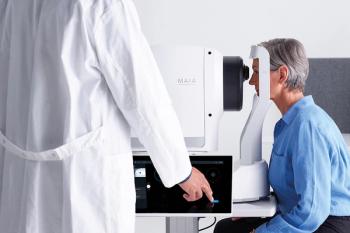
Learn how OCT aids neuro-ophthalmology, where it falls short, and why AI plus neurologist–ophthalmologist teamwork prevents misdiagnosis.
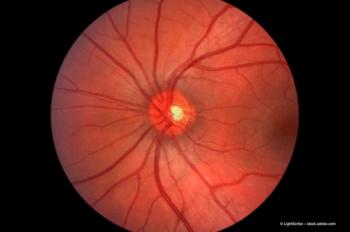
Steffen Hamann, PhD, FEBO, FRCOphth, offers insight into the landscape for optic disc drusen and the impact of advances in OCT.

Healthcare staff face splashes, aerosols, chemicals, and lasers daily; ANSI-rated eye protection and better compliance prevent most workplace injuries.

An ophthalmology resident shares insights from experiences across Mexico, Europe, and the US.

The certification supports continued European market access as the Medical Device Regulation imposes stricter requirements on manufacturers.

EYE PCR’s fixOflex is now eligible for European market introduction, providing clinicians with a method of preserving the capsular bag’s form after cataract surgery.

A separate ex-US settlement enables a launch in the United Kingdom beginning January 2026, in the rest of Europe from April 2026, and in other settled markets (excluding Korea) from May 2026.

The 22nd International Scientific Symposium on Ophthalmic Imaging will take place 18–19 September 2026 in Singapore, marking an expanded scientific scope while maintaining its focus on imaging in research and clinical practice.
The group recommends using “physicians” for doctors and “clinicians” or “health care professionals” for care teams.

Lorem ipsum dolor sit amet, consectetur adipiscing elit.

Retina specialists showcase innovation and precision in retinal care

Interventional therapies give patients faster relief and better outcomes

Proactive strategies enhance comfort, adherence and long-term glaucoma control
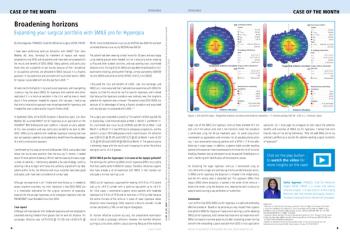
Discover how Dr. Smita Agarwal expanded her refractive portfolio with ZEISS SMILE pro for hyperopia, and why this flapless approach delivered excellent outcomes for her first hyperopic patient.

AI is reshaping clinical practice in retinal imaging and workflow optimization, according to Priv.-Doz. Dr. med. Jan H. Terheyden, FEBO.

Prof. Dr. Luís Abegão Pinto outlines how real-world datasets can improve artificial intelligence accuracy, reduce bias, and support clinical decision-making at scale.

A study reveals varying shear-thinning behaviors in artificial tears, highlighting the importance of mimicking natural tear properties for effective eye lubrication.

Ahead of the 2nd International Glaucoma Symposium in Mainz, Germany, Stephan Schulz of Heidelberg Engineering outlines how the program blends everyday clinical challenges with advances in AI, imaging, and surgery.
Expected in the US in Q2 2026, YUVEZZI from Tenpoint Therapeutics is the first fixed-dose combination eye drop formulated to enhance near vision via pupil modulation with once-daily use.