
Commentary|Articles|March 12, 2026
Detecting glaucoma before vision loss: the early indicators, imaging technologies, and the role of AI
Author(s)Marta Pazos, MD, PhD, Sheryl Stevenson
Marta Pazos, MD, PhD, on how OCT and emerging AI can help spot preperimetric glaucoma years before vision loss while avoiding false positives from myopia and disc anatomy.
Advertisement
Early detection remains one of the most consequential challenges in glaucoma management—a disease that robs patients of vision silently, often before any functional deficits are apparent. The window between the earliest detectable structural changes and the onset of visual field loss represents a critical opportunity for intervention, and understanding how to identify and act on those signals is increasingly central to preserving long-term patient outcomes. It was against this backdrop that the
Among the voices contributing to that dialogue was Marta Pazos, MD, PhD, director of the Clínic Ophthalmology Institute at the Hospital Clínic Barcelona, in Barcelona, Spain. A specialist with deep expertise in glaucoma diagnosis and imaging, Pazos has been at the forefront of efforts to integrate advanced technologies—including optical coherence tomography and artificial intelligence—into the clinical detection of glaucomatous disease at its earliest stages.
In a conversation with Ophthalmology Times Europe around the symposium, Pazos discussed the structural findings that should anchor every clinician's early glaucoma assessment, the promise and current limitations of AI-assisted detection, the anatomical pitfalls that complicate diagnosis, and the practical steps that eye care providers across different health systems can take to bring earlier, more consistent glaucoma detection into their everyday practices.
Below is a transcript of that conversation. It has been edited for clarity.
Ophthalmology Times Europe: What are some of the most reliable early indicators of preperimetric glaucoma that eye care clinicians should focus on during their routine examinations?
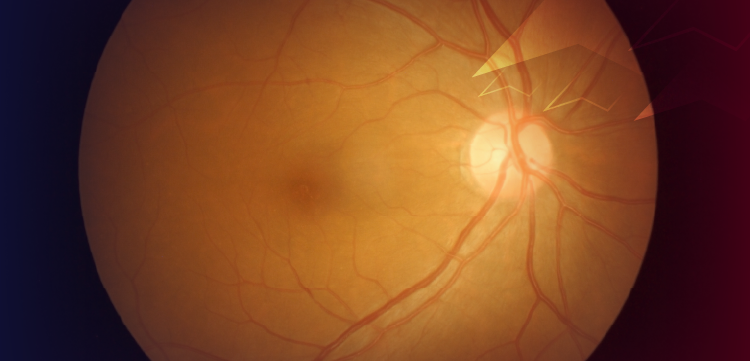
This is a key question because, by definition, preperimetric glaucoma requires the clinician to recognise very early structural damage, even before visual defects appear. As of today, in routine clinical practice, the optic nerve examination still remains fundamental, and the earliest and most reliable early finding is localised neuroretinal rim thinning—or notching—particularly in the inferior temporal and superior temporal regions. That is exactly where we need to look to identify that early damage.
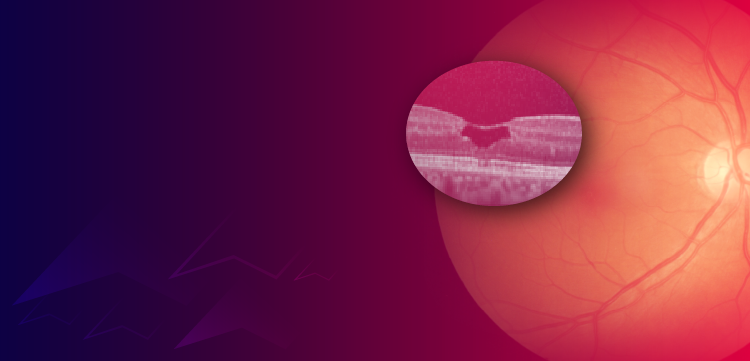
But beyond clinical examination—which, as I said, remains very important—OCT, or optical coherence tomography, has now become indispensable. This imaging allows us to detect changes in retinal nerve fibre layer thinning, so we can see those focal defects very clearly. We can also detect ganglion cell layer defects, not only in the parameters, but also in the deviation maps, because they have very specific patterns. There are several studies that have shown that those changes can precede visual defects by 3 to 7 years. It is important that we learn how to interpret them because the earlier we identify them, the earlier we can begin treatment for our patients.
Ophthalmology Times Europe: How might advanced imaging technologies, or perhaps AI tools, help with the detection of glaucoma before visual field loss even occurs?
Dense imaging is now able to improve both sensitivity and objectivity in detecting the disease. Modern OCT devices provide highly reproducible measurements. They also offer progression analysis, allowing us to monitor those measurements over time, and they can now even perform structure-function comparisons. That is genuinely helpful in everyday clinical practice because we can detect even very subtle changes.
But AI is taking this a step further. AI algorithms can analyse optic disc photographs, retinal nerve fibre layer maps, OCT, or combinations of all of the above—some are even multimodal and can incorporate more than one of those inputs, or add clinical data. That is very helpful, not only for diagnosis, but especially for risk prediction. We now have studies showing that deep learning models can predict which eyes will develop visual field loss and which will progress more rapidly—using only a baseline OCT or a baseline optic nerve image, even when the visual field shows only very early damage. That is very important because with this capability, we will be able to identify which patients require more resources. We will shift from a binary, yes-or-no glaucoma approach to a more probabilistic, risk-based model—and that is very important for us as clinicians when deciding who to monitor more closely and in which patients we need to be more aggressive in our management. AI will genuinely change our everyday practice in the future.
Ophthalmology Times Europe: What are some of the biggest challenges in distinguishing true early glaucoma from normal anatomical variations or other ocular conditions?
That is a limitation we encounter every day, and it is one where experience and caution really matter. One major issue is false positives—referred to in OCT as 'red disease'—where normal eyes are flagged as glaucomatous when they are entirely healthy. On the other side of the spectrum, we have 'green disease,' which refers to truly glaucomatous eyes that fall within the statistical range considered normal and so are classified as healthy when they are in fact diseased.
One source of this difficulty is anatomical variation, and we must account for that before drawing any diagnostic conclusions. One example is split retinal nerve fibre layer bundles—a completely normal variant in which bundles originate from the optic nerve not as one, but as split fibres. That completely confounds the algorithm that detects such changes and can produce what appears to be a localised defect that is not real, even in a healthy eye. Another classic example involves highly myopic eyes. These eyes normally exhibit anatomical changes such as tilted discs or peripapillary atrophy, and their elongation causes the retinal nerve fibre layers to shift. This significantly affects OCT measurements and comparisons, so we need to examine the anatomy first—and sometimes we can do that, as I mentioned, in the deviation maps of the OCT, not only in the numerical parameters but also in the qualitative imaging as well.
Other factors—such as small discs, very large discs, or tilted discs—must all be assessed in advance, as they can influence glaucoma diagnosis. Sometimes there are other neuropathies, such as optic neuritis or ischaemic optic neuropathies, that can resemble glaucoma. We need to consider those possibilities. This is precisely why imaging alone cannot be used for diagnosis. We need to integrate other clinical data: checking intraocular pressure, examining the optic nerve structure, reviewing the thickness maps beyond just the colour codes. It is essential to integrate all available clinical findings to avoid misdiagnosis.
In some of these cases, AI could be of help in the future—flagging situations that are not normal that we might otherwise overlook. As I said, we must not rely on any single parameter. We need to examine all the available data comprehensively in order to reach a proper diagnosis.
Ophthalmology Times Europe: How can early detection strategies impact long-term patient outcomes, and what steps can be taken to implement these into everyday practice?
It is very important to detect glaucoma early—we know that it changes patients' visual prognoses. The earlier we begin management, the better these patients will fare in the long run. Identifying glaucoma before visual loss has occurred has been shown to slow progression more effectively and to preserve quality of life, particularly in patients with a long life expectancy. From a systems perspective, improving early detection is also important in terms of moving beyond detection that occurs only in highly specialised glaucoma clinics and making it accessible more broadly.
Glaucoma is under-diagnosed, and that is another situation in which AI can be of help. AI tools based on fundus photographs and retinographies have enormous potential to improve referral pathways—whether from primary care to an optometrist or general ophthalmologist, depending on how health systems are structured in different countries. These tools can also support screening programmes by triaging populations, including those in underserved areas. Retinographies are not particularly costly, and all of this is likely to make glaucoma screening more feasible and more cost-effective.
This is particularly relevant now because we are beginning to see the first generation of studies in which these algorithms are being implemented in clinical practice. At our hospital, Hospital Clínic in Barcelona, we are running a study on retinography AI analysis in which we use this approach to triage and refer patients from their general practitioner to our service. This is helping us to identify those at higher risk of developing glaucoma without overwhelming our specialist capacity—a very real challenge for public hospitals.
In terms of practical implementation for everyday practice, I would encourage consistency in optic nerve examination, and I would recommend working in collaboration with community partners to build referral pathways that suit your local context and work with relevant government strategies. But those initiatives must be individualised to your particular setting and institution. In our case, we use AI in combination with general practice: photographs are taken at the GP level, and we use the analysis to refer those patients who are at the highest risk. That is, in essence, how we are now using AI to benefit our patients. Glaucoma is underdiagnosed—and if we can make this diagnosis more accessible, it will be much better for our patients.
REFERENCE
Pazos M. Early glaucoma – a comprehensive clinical guide detecting pre-perimetric glaucoma. Presented at: 2nd International Glaucoma Symposium; 31 January 2026; Mainz, Germany.
Advertisement
Related Content
Advertisement

Latest CME















Advertisement
Advertisement
Trending on Ophthalmology Times Europe
1
Demodex blepharitis: Closing the diagnostic gap to improve ocular surface health
2
DEX implant shows benefit across RVO subgroups in real-world retrospective study
3
AI-predicted retinal function shows promise in geographic atrophy
4
Q&A: Uveitis risk rises as immune checkpoint inhibitor use expands
5