
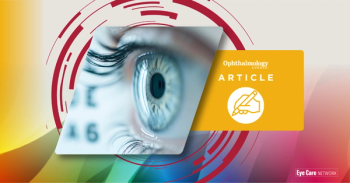
Publication|Articles|April 10, 2026
- Ophthalmology Times Europe March/April 2026
- Volume 22
- Issue 2
Paediatric and strabismus care: Evolving tools, emerging therapies
Author(s)Sheryl Stevenson
Specialists discuss diagnostic technologies, treatment strategies and research that are improving outcomes for young patients.
Advertisement
Paediatric ophthalmology continues to evolve, with advances in diagnostic imaging, surgical techniques and emerging therapies reshaping the management of childhood eye disorders.
The Eye Care Network caught up with specialists in paediatric and strabismus care to discuss timely topics in this field.
The conversation explores how imaging and diagnostic innovations have improved paediatric eye care, the most promising therapies and surgical approaches for amblyopia, strategies for early detection of strabismus in high-risk children and potential pipeline treatments that could transform the management of inherited paediatric retinal disorders.
How have imaging or diagnostic innovations improved paediatric
eye care?
Laura B. Enyedi, MD: Optical coherence tomography [OCT] and optical coherence tomography angiography, especially handheld and portable options for infants and young children, have revolutionised how we diagnose and monitor paediatric retinal disease, glaucoma and many neuro-ophthalmology conditions.
Anterior segment OCT [AS-OCT] is being increasingly used for patients with complex anterior segment issues such as cataracts, anterior segment dysgenesis, trauma and tumours.
Widefield retinal imaging is a useful adjunct to fundus examination with indirect ophthalmoscopy and has even been piloted in paediatrician offices as a screening tool. Tele-ophthalmology can be a useful tool for screening (eg, retinopathy of prematurity) and for expanding access to subspecialty care, especially since there are widespread access issues for paediatric ophthalmology specialists. Instrument-based photo screeners help detect amblyopia risk factors in primary care offices.
There has been an expansion of genetic testing options for early and accurate diagnosis of inherited retinal diseases such as retinitis pigmentosa, Leber congenital amaurosis and Stargardt disease, as well as systemic disorders with ocular manifestations in children such as neurofibromatosis and Marfan disease.
There are exciting advances in paediatric visual field [VF] testing with virtual reality–based VF perimetry, which may be easier and more engaging for children than standard perimetry.
There is promising research showing AI [artificial intelligence] models may be able to identify treatable eye conditions such as refractive error and strabismus from smartphone images.
David G. Hunter, MD, PhD: Imaging is allowing us to diagnose ocular disorders at much earlier stages than their once classical clinical presentations, including keratoconus and Stargardt disease. We use adjunctive multimodal imaging for many of the paediatric conditions we treat—from [AS-OCT] and in vivo confocal microscopy for corneal and ocular surface disease to ultrasound biomicroscopy for paediatric glaucoma and OCT for neuro-ophthalmic and retinal disorders.
In paediatric cornea, high-resolution AS-OCT and confocal imaging have enabled detailed visualisation of the corneal layers, limbal stem cell niche and corneal nerves, improving diagnosis and longitudinal monitoring of congenital opacities, limbal stem cell deficiency and neurotrophic keratopathy. We have found ultra-widefield and swept-source OCT to be especially valuable for paediatric retina patients, including those with limited tolerance for peripheral exams in clinic. Integration of OCT into the surgical microscope has enhanced precision in both anterior and posterior segment surgery, helping ensure optimal graft apposition in paediatric lamellar keratoplasty as well as correct anatomical placement for subretinal injections.
Which therapies or surgical techniques are emerging as most effective for amblyopia?
Enyedi: Patching and optical treatment of refractive error are tried-and-true methods of amblyopia therapy, but digital dichoptic therapies, which present different information to each eye simultaneously, have been recently
FDA approved for amblyopia treatment in children and are showing much promise.
Hunter: I am excited about the new binocular treatments for amblyopia, with two such treatments now FDA approved as safe and effective for treatment. Now, instead of asking parents to force kids to wear an eye patch, [which is] often impossible, or hold them down to get an atropine drop in one eye several days a week, there is a third option: allowing them to watch videos for 1 hour a day, 6 days a week.
This binoculartherapy is effective for previously untreated amblyopia, and it also works unexpectedly well in kids who have failed traditional treatment. Where we used to stop treating amblyopia once a child got “stuck” and stopped improving around age 8, one treatment [Luminopia] was recently FDA approved for treatment of kids as old as age 12—a major advance.
On the surgical front, amblyopia is a brain disease, not an eye disease,...so there is no reason to think that surgery would directly treat amblyopia, but there is growing consensus that it does not help to wait until amblyopia is treated before operating on strabismus, with some evidence that reducing the angle of strabismus [with surgery] allows for more rapid response to amblyopia therapy. This is especially the case for binocular treatments, which require good eye alignment for best results.
How do you approach early detection of strabismus in high-risk children?
Enyedi: Annual comprehensive eye exams are not necessary for most healthy children. Primary care doctors repeatedly screen for paediatric eye problems, including strabismus and amblyopia. They examine the eye position, eye movements, and pupillary red reflex; use instrument-based screeners; and perform vision testing in children who are able. Children who test abnormally should be referred for comprehensive eye exams. Extra care should be taken in children who are at higher risk for strabismus, including those with a family history of strabismus, children who are born prematurely or with a low birth weight and children who have neurologic abnormalities.
Hunter: Traditional photoscreening devices are autorefractors that evaluate children for risk factors for strabismus and amblyopia, but they are not able to detect microstrabismus, a common cause of amblyopia and loss of binocular vision. There is one device [blinq; Rebion]—which I co-invented and is now commercially available—that performs a binocular retinal scan and detects microstrabismus with very high accuracy in most studies. While risk factor screening devices miss cases and lead to false referrals, widespread adoption of the blinq device for vision screening would detect both strabismus and amblyopia in most children when they develop. The result would be early detection not only in high-risk children but in the entire paediatric population, potentially eliminating severe vision loss from amblyopia and preserving binocular vision before it is too late to recover.
Are there pipeline therapies that could shift the management of inherited paediatric retinal disorders?
Enyedi: I will defer to my colleague, Dr Ramiro Maldonado, who is an expert in inherited retinal disorders, to answer this question.
Ramiro Maldonado, MD: Yes—several emerging therapies may soon transform the management of inherited paediatric retinal disorders. We already have an FDA-approved treatment for Leber congenital amaurosis and retinitis pigmentosa [RP] due to RPE65 mutations. Additionally, phase 3 trials are underway for X-linked RP, and multiple other gene-specific therapies are advancing through early-phase studies. Most notably, for the first time, clinical trials for Stargardt disease are evaluating both oral and gene therapy approaches, representing a major milestone for paediatric retinal care.
Hunter: Our ophthalmologists are participating in a number of clinical trials that show promise for treating inherited retinal disorders. The first FDA approval for gene therapy to treat Leber congenital amaurosis has launched an exciting pipeline of other potential therapies, with ongoing studies for other conditions that use a variety of gene-editing or replacement technologies. Some of these are even gene agnostic, meaning that they do not require a specific variant to be effective. Other new technologies show promise to be a one-and-done treatment to restore vision. It is empowering to be able to share with patients and families potential future cures for what are currently blinding conditions.
Laura B. Enyedi, MD
E: [email protected]
Enyedi is professor of ophthalmology and associate professor in paediatrics at Duke University in Durham, North Carolina, US. She has no relevant disclosures.
Enyedi is professor of ophthalmology and associate professor in paediatrics at Duke University in Durham, North Carolina, US. She has no relevant disclosures.
David G. Hunter, MD, PhD
E: [email protected]
Hunter is vice chair for promotions and reappointments, Department of Ophthalmology at Harvard Medical School, and ophthalmologist in chief and the Richard M. Robb Chair in Ophthalmology at Boston Children's Hospital in Boston, Massachusetts, US. He has no relevant disclosures.
Hunter is vice chair for promotions and reappointments, Department of Ophthalmology at Harvard Medical School, and ophthalmologist in chief and the Richard M. Robb Chair in Ophthalmology at Boston Children's Hospital in Boston, Massachusetts, US. He has no relevant disclosures.
Ramiro Maldonado, MD
E: [email protected]
Maldonado is associate professor of ophthalmology, vitreoretinal diseases and surgery at Duke Center for Ophthalmic Genetics in Durham, North Carolina, US. He has no relevant disclosures.
Maldonado is associate professor of ophthalmology, vitreoretinal diseases and surgery at Duke Center for Ophthalmic Genetics in Durham, North Carolina, US. He has no relevant disclosures.
Articles in this issue
Advertisement
Related Content
Advertisement

Latest CME

















Advertisement
Advertisement
Trending on Ophthalmology Times Europe
1
Synthetic corneal implant shows promise in eyes with chronic corneal oedema
2
Hands-on training, real surgeon input: inside BVI's new Experience Hub
3
Saudi cohort study finds JIA drives most paediatric uveitis cases
4
How the ocular microbiome may shape outcomes in keratoplasty
5