
News|Articles|February 1, 2026
Broadening horizons: Expanding your surgical portfolio with SMILE pro for Hyperopia
Advertisement
I have been performing Lenticule Extraction with SMILE® (Carl Zeiss Meditec AG, Jena, Germany) for treatment of myopia and myopic astigmatism since 2018, and my patients and I have been very pleased with the results and benefits of ZEISS SMILE. Many patients, and particularly those who are susceptible to eye trauma because of their recreational or occupational activities, are attracted to SMILE because it is a flapless approach. In my experience and consistent with published reports, SMILE for myopia is associated with less dry eye than LASIK.1,2,3
At least one-third of adults in my practice are hyperopes, and I was getting numerous inquiries about SMILE for hyperopia from patients who either read about it in a brochure available in the clinic waiting area or heard about it from someone I treated for myopia. Until last year, I had to say that lenticule extraction approach was not yet approved for hyperopia, and I treated the ones suitable and willing with Femto-LASIK.
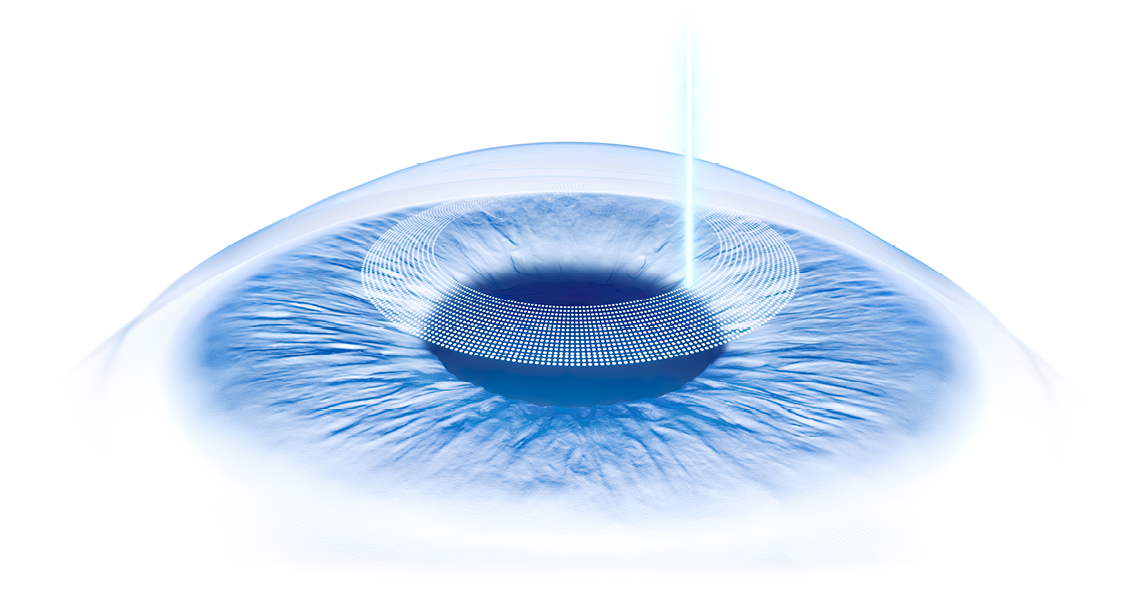
In September 2024, at the ESCRS Congress in Barcelona, Spain, Carl Zeiss Meditec AG launched SMILE® pro for hyperopia as an application on the VISUMAX® 800 femtosecond laser platform. I became an early adopter of this new procedure and was particularly excited to be able to offer ZEISS SMILE pro to patients with moderate hyperopia knowing that now also my hyperopic patients could potentially benefit from the advantages of a lenticule extraction approach.
I performed my first case at the end of November 2024, and as described below, the results were excellent. Over the ensuing 11 months, I treated about 10 more patients bilaterally. While I had the capacity to treat a larger number of patients, I intentionally adopted a focused strategy, carefully selecting criteria to begin with those who perfectly aligned with my ideal patient profile. So far, the refractive and visual outcomes have been good and stable, and I have seen no evidence of corneal haze.
Although my experience is still limited and more follow-up is needed to assess long-term outcomes, my initial impression is that ZEISS SMILE pro is a remarkable alternative for the surgical correction of hyperopia, especially for the younger hyperopes, as for presbyopic hyperopic ones I do PRESBYOND® Laser Blended Vision from ZEISS.
Case report
A 48-year-old male teacher with moderate hyperopia and low astigmatism presented wanting freedom from glasses that he wore for distance. His cycloplegic refraction was +4.75/-0.50 @ 115 OD and +4.50/-0.75 @ 90 OS. Uncorrected distance visual acuity (UCDVA) was 6/60 OU and best corrected distance visual acuity (BCDVA) was 6/6 OU.
The patient had been wearing contact lenses for 20 years and was happy using reading glasses when needed, but he is physically active, enjoying surfing and other outdoor activities, and was wanting clear uncorrected distance vision. His eligibility for SMILE pro was determined based on a full examination showing, among other findings, corneal pachymetry 548/549 microns OD/OS and white-to-white (WTW) 12.0/12.2 mm OD/OS.
I discussed the risks and benefits of LASIK, clear lens exchange, and SMILE pro. I also explained that I had extensive experience with SMILE for myopia, but that this would be my first case for hyperopia, and I shared that because the hyperopia procedure was relatively new, the long-term potential for regression was unknown. The patient chose ZEISS SMILE pro because of its advantages of being a flapless procedure and associated with less dry eye risk compared with LASIK.1,2,3
The surgery was completed successfully. The patient’s UCDVA was 6/6 OU on postop Day 1 and remained stable at Week 1, Month 1, and Month 11. His uncorrected near visual acuity (UCNVA) was N6 OU at Week 1 and Month 1; at Month 11 it was N10 due to presbyopia progression, and the patient is using +1.00 D add glasses only for close fine work. His refraction was 0.00/-0.25 @ 95 OD and 0.00/-0.25 @ 45 at Month 1 and +0.25/ -0.25 @ 90 OD and 0.00/0.00 @ 000 OS at Month 11. The patient said he is extremely happy with the results and is enjoying his active life without having to use his +5.5 D glasses.
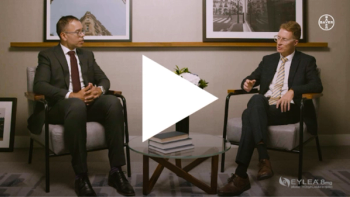
Watch the video below for more insights on the case!
ZEISS SMILE pro for hyperopes: Is it same as for myopic patients?
The technique for performing SMILE pro for hyperopia differs only slightly from that used to perform SMILE for myopia. Therefore, refractive surgeons who have already a lot of experience with SMILE in their toolbox can anticipate a minimal learning curve.
SMILE pro for hyperopia is approved for treating +0.15 D to +7 D sphere and up to +4.0 D cylinder with a spherical equivalent up to +6.5 D. For initial cases, I recommend surgeons select patients with moderate hyperopia (+2.5 D to +5.75 D) and no more than +1.75 D cylinder because the central thinness of the lenticule in cases of lower hyperopia makes dissection more challenging. Other selection criteria to consider include corneal pachymetry ≥ 500 µm and regular topography.
To improve refractive outcome accuracy, the preoperative examination should include a cycloplegic refraction. However, the manifest refraction pushing plus should be used for surgical planning. Because of the relatively larger size of the SMILE pro hyperopic lenticule (total diameter 8.3 mm with a 6.3 mm optical zone and 2 mm transition zone), the procedure is performed using the M-size treatment pack. To avoid conjunctival involvement on applanation and minimize risk of pseudosuction/suction loss, I also recommend choosing patients with a WTW > 11.8 mm after factoring in angle kappa. In addition, surgeons might consider avoiding patients with excessive limbal blood vessels to minimize the risk of incisional bleeding. However, topical phenylephrine can be applied if bleeding occurs and is interfering with identification of the dissection planes.
For dissecting the larger hyperopic lenticule, I recommend using an instrument with a longer arm and moving it with a windshield wiper action. In SMILE pro for hyperopia, the dissection is initiated in the midperiphery, and the thin central area is dissected last. This approach differs from myopic SMILE where dissection is started in the center of the lenticule. I dissect the center using the dissector arm, keeping the tool’s bulbous tip away to avoid causing a cap perforation or buttonhole.
Conclusion
I can confirm that ZEISS SMILE pro for hyperopia is a safe and predictably effective procedure.Based on my personal journey, I expect that surgeons who perform SMILE for myopia will have a short learning curve for adopting SMILE pro for hyperopia, and I believe that those who lack experience with SMILE can expect to achieve great results after completing proper training and with the onboarding support available from ZEISS clinical application specialists. So, I encourage my colleagues to learn about the potential benefits and outcomes of SMILE pro for hyperopia. I believe that once they do, they will be asking themselves, “Why not add SMILE pro to my practice’s portfolio as a solution for patients wanting surgical correction of hyperopia?”
Smita Agarwal, FRANZCO, Grad Dip Refractive Surgery (USYD), FWCRS is a corneal and cataract refractive surgeon in private practice at Wollongong Refractive Laser Eye Institute Wollongong, Australia. She doesn’t have any financial interest in this procedure.
References:
1 Recchioni A, Sisó-Fuertes I, Hartwig A, Hamid A, Shortt AJ, Morris R, Vaswani S, Dermott J, Cerviño A, Wolffsohn JS, O’Donnell C. Short-Term Impact of FS-LASIK and SMILE on Dry Eye Metrics and Corneal Nerve Morphology. Cornea. 2020 Jul;39(7):851-857. doi: 10.1097/ICO.0000000000002312. PMID: 32243424.
2 Angela H Y Wong, Rachel K Y Cheung, Wee Nie Kua, Kendrick C Shih, Tommy C Y Chan, Kelvin H Wan. Dry Eyes After SMILE, Asia Pac J Ophthalmol (Phila). 2019 Sep-Oct;8(5):397-405. doi: 10.1097/01.APO.0000580136.80338.d0.
3 Kobashi H, Kamiya K, Shimizu K. Dry eye after small incision lenticule extraction and femtosecond laser-assisted LASIK: meta-analysis. Cornea. 2017;36(1):85-91.
Advertisement
Related Content

Latest CME















Advertisement
Advertisement
Trending on Ophthalmology Times Europe
1
Hands-on training, real surgeon input: inside BVI's new Experience Hub
2
Saudi cohort study finds JIA drives most paediatric uveitis cases
3
Phaco-GSL outperforms in acute angle-closure glaucoma over chronic cases, 2-year study finds
4
How the ocular microbiome may shape outcomes in keratoplasty
5