
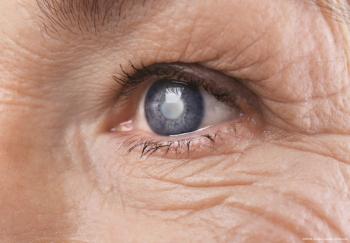
Marta Pazos, MD, PhD, on how OCT and emerging AI can help spot preperimetric glaucoma years before vision loss while avoiding false positives from myopia and disc anatomy.
Marta Pazos, MD, PhD, on how OCT and emerging AI can help spot preperimetric glaucoma years before vision loss while avoiding false positives from myopia and disc anatomy.

Experts share practical and research-based advancements, offering actionable strategies in diagnosis, treatment, and early detection.
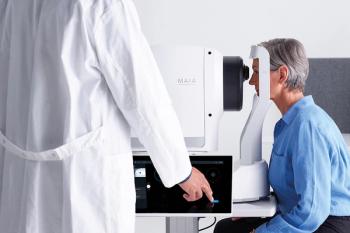
Learn how OCT aids neuro-ophthalmology, where it falls short, and why AI plus neurologist–ophthalmologist teamwork prevents misdiagnosis.
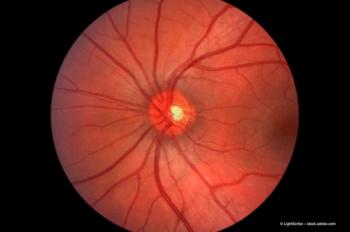
Steffen Hamann, PhD, FEBO, FRCOphth, offers insight into the landscape for optic disc drusen and the impact of advances in OCT.

Marta Pazos, MD, PhD, examined the role of optical coherence tomography, artificial intelligence, and clinical evaluation in early glaucoma management.
Steffen Hamann, PhD, FEBO, FRCOphth, discusses how optic disc drusen can mimic glaucoma and discussed evolving imaging and research strategies.
Andrew Tatham, MD, MBA, FRCOphth, FEBO, outlines the role of micro-invasive glaucoma surgery alongside established glaucoma procedures, focusing on safety, patient selection, and future directions.

AI is reshaping clinical practice in retinal imaging and workflow optimization, according to Priv.-Doz. Dr. med. Jan H. Terheyden, FEBO.

Prof. Dr. Luís Abegão Pinto outlines how real-world datasets can improve artificial intelligence accuracy, reduce bias, and support clinical decision-making at scale.
Prof. Dr. med. Wolf A. Lagrèze highlights the clinical role, limitations, and future potential of optical coherence tomography in glaucoma and neuro-ophthalmic disease.

Ahead of the 2nd International Glaucoma Symposium in Mainz, Germany, Stephan Schulz of Heidelberg Engineering outlines how the program blends everyday clinical challenges with advances in AI, imaging, and surgery.

US and international glaucoma specialists will converge in Mainz, Germany, on 31 January 2026, to map the next era of glaucoma care—covering AI diagnostics, optic neuropathy evaluation, and modern surgical approaches.

At the 2nd International Glaucoma Symposium on 31 January 2026, leading clinicians and researchers will share cutting-edge insights on modern surgical techniques, optic neuropathy assessment, and artificial intelligence-driven diagnostics.