









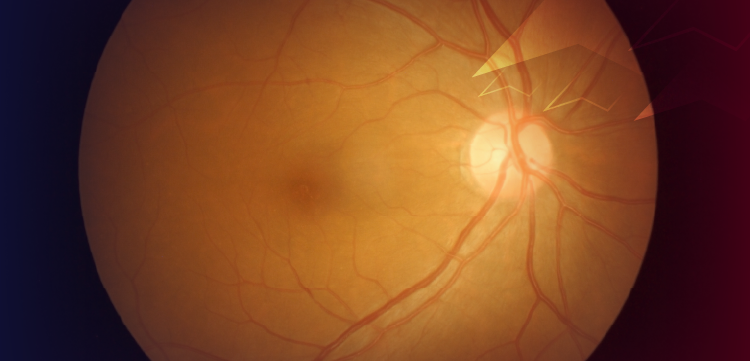






Diets low in trans-unsaturated fat and rich in omega-3 fatty acids and olive oil may reduce the risk of AMD, according to a study by Chong et al., published in The Archives of Ophthalmology.
Diets low in trans-unsaturated fat and rich in omega-3 fatty acids and olive oil may reduce the risk of AMD, according to a study by Chong et al., published in The Archives of Ophthalmology.
Sutureless transconjunctival 20 g ppv is, according to this study, an ideal technique for all vitreoretinal surgeries.
New research indicates that patients with diabetic retinopathy (DR) should also be screened for obstructive sleep apnoea (OSA).
A diabetic retinopathy (DR) progression biomarker software has been developed with the research institute AIBILI (Association for Biomedical Research and Innovation in Light and Image) and Critical Health. The RetmarkerDR is able to calculate and provide important ratios regarding Microaneurysm Turnover (formation and disappearance rates) which are key indicators of progression of retinal diseases like Diabetic Retinopathy.
Speakers at the symposium "Retinal Surgery — New Dimensions in Patient Safety," described three methods/instruments to help surgeons minimize complications during surgery including improved endotamponade applications, new cannula designs and microscope data projections.
Retina navigation is a new retina therapy solution, four years in the making by OD-OS, which means a doctor can image, plan and treat using a single platform. It was demonstrated to over 100 doctors at the Euretina meeting.
The 9th Euretina Congress took place during May in Nice, France and was attended, according to the organisers, by around 1700 delegates. This was a seminal event and will be the last of its kind as next year it will join forces with ESCRS (European Society of Cataract and Refractive Surgeons) in Paris from 2–8 September.
A diabetic retinopathy (DR) progression biomarker software has been developed with the research institute AIBILI (Association for Biomedical Research and Innovation in Light and Image) and Critical Health.
Central retinal vein occlusion (CRVO) is caused by obstruction of the central retinal vein that that leads to a back up of blood and fluid in the retina, resulting in retinal injury and loss of vision.
A new collaboration between Oxford BioMedica and Sanofi-Aventis is to develop and commercialise gene therapy treatments for retinal degenerative diseases such as Stargardt disease, the form of early-onset macular degeneration and Usher syndrome, a relatively rare genetic disease where sufferers are born deaf and lose vision within the first 10 years of life.
Ophthotech Corp. has announced positive results of a phase I clinical study evaluating E10030, its novel anti-platelet derived growth factor (anti-PDGF) in conjunction with an anti-vascular endothelial growth factor (anti-VEGF), to treat wet age-related macular degeneration (wet AMD).
Patients suffering from AMD have experienced long-term benefits from using the Macular Health vitamin supplement following the second phase of the Multifocal Electroretinogram (MERG) study at the Callahan Eye Foundation Hospital at the University of Alabama Birmingham (US).
Foveal thickness and macular volume decrease after phaco in eyes with diabetic macular oedema, with changes even more pronounced in patients with diabetic retinopathy.
Looking at an activity socring system to define lesions associated with wet AMD by quantifying their activity to determine the need for treatment.
Looking at a new technique to prepare and transplant endothelial grafts usinf subendothelial air injections to separate donor Descemet and endothelium from overlying stroma.
When injecting silicone oils with a viscosity of 5000 mPas, which are used frequently, retinal surgeons often reach limits of applicability.
The pioneering stem cell therapy, developed by British researchers to tackle AMD, has received the financial backing of pharma giant, Pfizer Inc., which is expected to pump in £50 million over the next three to five years.
Interim analysis of Phase II trials for fenretinide and its use in the treatment of geographic atrophy (GA) are looking positive, according to Sirion Therapeutics, Inc.
Positive interim data results from the Phase II trial of OT-551 to treat geographic atrophy (GA), an advanced form of AMD, have been announced by Othera Pharmaceuticals Inc.
1.25 million neurons view the world through receptive fields, which operate like a multi-layered jigsaw puzzle. Researchers at the Salk Institute for Biological Studies imply that the nervous system operates with higher precision than previously appreciated, and that apparent irregularities in individual cells may actually be coordinated and more finely tuned.
The Schepens Eye Research Institute has found that retinal dysfunction may be caused by blocking the growth factor TGF-beta. The research may have an important impact on the prevention and treatment of diabetic retinopathy and macular degeneration.
"When treating patients with DME, ophthalmologists should consider the role of the glitazone class of drugs," warn the authors of a study published in the April issue of the American Journal of Ophthalmology.
The premarket application for VisionCare Ophthalmic Technologies Inc's implantable telescope for end-stage AMD has been approved, with conditions, by the FDA in the US.
Ciliary epithelial cells inside the eye, previously proposed as retinal cell stems, have now been established as being normal adult cells. The misidentification was uncovered by Michael Dyer, PhD and researchers at the St Jude Department of Developmental Neurobiology.
Researchers at the Moran Eye Centre are using transmission electron microscopes (TEMs) to develop TEM-compatible molecular probes with software that will tag cells with a molecular signature, creating 'colour' TEM imaging.