







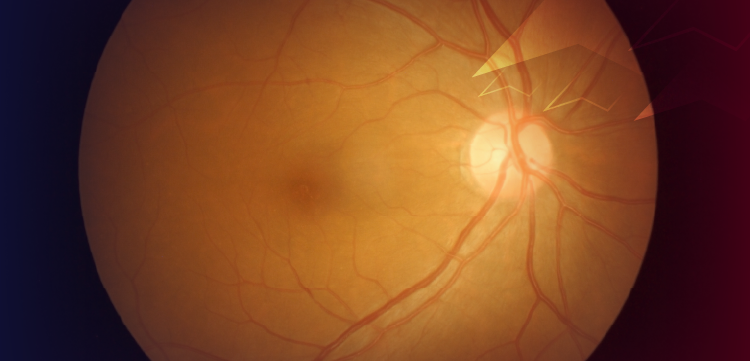








The World Glaucoma Day inspired glaucoma specialists around the world to rally local support in order to undertake an enormous task: to reduce the number of people who are unnecessarily going blind from a treatable condition.
The World Glaucoma Day inspired glaucoma specialists around the world to rally local support in order to undertake an enormous task: to reduce the number of people who are unnecessarily going blind from a treatable condition.
QLT Plug Delivery, Inc. has demonstrated proof of concept of its punctal plug drug delivery technology, showing that it is both well tolerated and effective at lowering intraocular pressure (IOP).
Vidus Ocular, Inc, the developer of the Aquashunt device for glaucoma, has been acquired by OPKO Health, Inc.
The addition of bevacizumab (Avastin) to trabeculectomy improves the success rate of IOP control, particularly in young diabetic patients with neovascular glaucoma (NVG), according to a study published online, ahead of print, by Eye.
The safety of endoscopic cyclophotocoagulation for the treatment of glaucoma is being investigated prospectively in a multicenter study.
IOP can be reduced significantly by an anterior juxtascleral depot of anecortave acetate, according to study results presented on a poster at this year's meeting of the Association for Research in Vision and Ophthalmology.
PF-03187207, an experimental glaucoma treatment that was being developed by NicOx and Pfizer, has been shown in Phase II testing to be more effective in lowering IOP under certain circumstances than Pfizer's Xalatan (latanoprost) 0.005%, but it will not be advanced into Phase III testing, Pfizer has announced.
Three separate studies on eye health examine the role of antioxidant supplements, the relationship of visual acuity and mortality, and the causes of glaucoma in the May 2008 issue of Ophthalmology, the journal of the American Academy of Ophthalmology.
A five-minute test in which a patient is tilted produces peak IOP detection levels comparable to standard water drinking tests, according to a poster presented at this year's meeting of the Association for Research in Vision and Ophthalmology.
The Collaborative Initial Glaucoma Treatment Study (CIGTS) showed that substantially lowering IOP, whether through medication or surgery, can prevent vision loss. One of the major trials of recent years, CIGTS also showed that surgery was an effective first-line treatment and had important findings on quality of life.
The iCare tonometer (Tiolat) has been approved for use in China by the country's State Food and Drug Administration (SFDA); the tonometer is now approved in every major global market.
The presence of benzalkonium chloride (BAK) has no impact on the safety or efficacy of travoprost in lowering intraocular pressure (IOP), according to a study published in the April/May 2008 issue of the Journal of Glaucoma.
Paediatric cataract surgery, particularly when performed in patients under the age of nine months, entails a substantial risk of post-surgical glaucoma, according to a study published in the January 2008 issue of Investigative Ophthalmology and Visual Science.
Young male glaucoma sufferers are most likely to discontinue their treatment at a glaucoma clinic during the first year of follow-up, according to a study published in the April/May 2008 issue of the Journal of Glaucoma.
An aspheric IOL may be considered the implant design of choice for most patients with glaucoma who require cataract surgery, said Richard L. Lindstrom, MD.
"See America", a contest to promote the importance of eye exams in the prevention of glaucoma, has been launched by Prevent Blindness America.
Reichert, Inc.'s applanation tonometer, the Tono-Pen Avia, was one of 33 products named winner of a 2008 Medical Design Excellence Award (MDEA).
Bottles of infected eye drops are more likely to be contaminated with bacteria at the bottle tip and not within the solution, according to a study presented at this year's American Society of Cataract and Refractive Surgery (ASCRS) meeting.
Carl Zeiss Meditec has unveiled the most advanced visual field testing platform available today - the Humphrey Field Analyzer II-i (HFA II-i) with Guided Progression Analysis (GPA) software.
The Tube versus Trabeculectomy (TVT) Study found that nonvalved tube shunt surgery was more likely to maintain IOP control and avoid persistent hypotony and reoperation for glaucoma than trabeculectomy with mitomycin C (MMC) during the first year of follow-up.
Hi-Tech Pharmacal Co., Inc. has announced that the FDA has granted tentative approval to the company's Abbreviated New Drug Application (ANDA) for dorzolamide hydrochloride with timolol maleate ophthalmic solution, the generic equivalent of Merck's Cosopt.
Intraocular pressure (IOP) rises significantly and rapidly in eyes that have received an intravitreal injection of triamcinolone acetonide (IVTA), according to a study published in the March issue of the Journal of Ophthalmology.
Which is better at detecting glaucomatous progression: the physician's judgment, based on skills such as interpreting optic disk photographs, or new technologies?
Nonpenetrating glaucoma surgery has little potential to reduce intraocular pressure (IOP) values, according to a study published in the March issue of the Journal of Ophthalmology.
Intraocular pressure (IOP) lowering drugs are more effective in eyes with low central corneal thickness (CCT) than those with high CCT, according to a study published in the March issue of Journal of Glaucoma.