
News|Articles|December 1, 2025
From skepticism to clarity and focus: A family’s PRESBYOND experience
Author(s)Dr. Aadithreya Varman
Advertisement
Inability to focus clearly on objects at near and intermediate distances with presbyopia causes difficulties with common daily tasks, including reading, smartphone use, and computer work. As it is estimated that presbyopia affects approximately 80% of individuals by age 55 years1, there exists a large population of pre-cataract patients coping with the functional consequences of presbyopia.
At the Uma Eye Clinic in Chennai, India, where I am co-medical director with my father, Dr. N. V. Arulmozhi Varman, Clear Lens Exchange (CLE) with implantation of a multifocal intraocular lens has been our procedure of choice for patients without cataract wanting a surgical solution for presbyopia. We chose to avoid the presby-LASIK approaches that create a multifocal cornea and LASIK monovision because, in our view, these options carried too many drawbacks, including dysphotopsias (halos and glare) with the multifocal procedures and loss of stereopsis and intolerance to anisometropia with monovision2.
We also rejected any thought of adding PRESBYOND® from ZEISS to our surgical armamentarium for presbyopia based on uninformed, erroneous beliefs that it was either a monovision approach or no different from any of the presby-LASIK techniques. My perspective on PRESBYOND changed two years ago, however, when I heard it discussed by Professor Dan Z. Reinstein during a “ZEISS User Meeting”.
After learning about the concept, principles, and results, I decided to give PRESBYOND a chance. In June 2023, I attended the Forefront Refractive Surgery course led by Prof. Reinstein and Glenn Carp, MD, at the London Vision Clinic. By that time, the VISUMAX 800 femtosecond laser (Carl Zeiss Meditec AG; Jena, Germany) was already used in our clinic, since ZEISS SMILE pro was our dominant refractive surgery procedure. The MEL 90 excimer laser (Carl Zeiss Meditec AG; Jena, Germany) was purchased for the express purpose of introducing PRESBYOND.
I performed my first PRESBYOND case in October 2023. In this article I would like to share how I was able to optimize my PRESBYOND results thanks to excellent onboarding support from ZEISS and how the outcomes and benefits of PRESBYOND are convincing more patients, including my stubbornly skeptical father, to choose surgery for managing presbyopia.
PRESBYOND - What surgeons need to know
Using ZEISS PRESBYOND, the surgeon plans a customized binocular LASIK-based procedure to both manage presbyopia and correct refractive error. Because it targets a plano refraction in the dominant eye and up to -1.5D in the non-dominant eye, PRESBYOND may be incorrectly considered a conventional monovision LASIK procedure for managing presbyopia.
The basis for PRESBYOND’s efficacy, however, is that it increases depth of field by inducing a controlled amount of spherical aberration (SA) in each eye combined with the micro-anisometropia. The enhanced depth of field extends the range of vision in each eye creating a “blend zone” in the intermediate range. Combining the vision from the two eyes gives a clear continuous range of vision from near through intermediate to far, and because PRESBYOND creates a continuous aspheric profile on the cornea, not multifocality, patients maintain good visual quality and contrast sensitivity.3,4
Depth of focus (DoF) curves from a patient treated using the PRESBYOND software illustrate the “blend zone” in practice and how it differs from monovision (Figures 1a and 1b).
My PRESBYOND journey
After attending the Forefront course, I was confident that I could achieve good outcomes with PRESBYOND. My initial experience was positive, but I encountered some challenges, particularly when treating low myopes and emmetropes among whom there were cases of off-target refraction leading to complaints of cross blur.
After doing about 20 cases, I reached out to ZEISS and took advantage of the company’s Applicational Onboarding Support Program. In April 2024, a ZEISS clinical trainer spent two days at our practice, reviewed all the cases performed to date, observed our workflow and procedures, and made recommendations that mainly focused on our preoperative testing protocols. The trainer emphasized the need to measure refraction precisely for these presbyopic patients. Whichever surgical option is chosen, a presbyopic patient has less residual accommodation to compensate for any refractive error.
To provide clear vision at near, intermediate, and far distance, the trainer recommended to aim for a refraction to be within 0.25D of target. I also learned to input the functional age of each eye and the preoperative SA into the planning program. PRESBYOND works by targeting a “therapeutic” range of SA and achieving that target depends on having the correct preoperative value.
My results have been outstanding since I implemented these recommendations. Outcomes from a series of 86 patients seen at a 3-month follow-up show that they all achieved binocular uncorrected vision of ≥20/20 at distance, J2 at near (33 cm), and J2 at intermediate (60 cm). Eighty-one patients (78%) achieved even better outcomes of 20/16 at distance and J1 at near while the remaining 5 patients saw J1 at near and 20/20 at distance.
Based on my experience, I tried to convince my father that he should stop doing CLE for presbyopia in patients without cataract, but he refused to switch to PRESBYOND. In January 2025, however, he changed his mind after realizing my PRESBYOND patients were not returning with complaints about difficulty reading in dim light, dysphotopsia, ghosting, and contrast loss.
Not only was my father willing to begin performing PRESBYOND, but in February 2025, at age 67 years, he became one of my PRESBYOND patients. His preoperative refraction was +0.25/-2.25 @ 90° 6/5 OD and -2.00 @ 85° 6/5 OS with a near vision add of +2.50 D. He had clear vision with glasses, but frequently developed migraines after prolonged reading.
I performed PRESBYOND on him at 5 PM on a Monday afternoon. The next morning, my father was in the OR, and without wearing glasses, performed the seven cataract procedures that were on his schedule. At 3 months postop, his uncorrected vision is 6/5 at distance and N5 at near. He also happily reports that images are much crisper with good contrast and his problem with migraines “seemed to disappear overnight”.
ZEISS PRESBYOND as a practice builder
The number of procedures I was performing monthly to manage presbyopia in patients without cataract increased as soon as I began offering PRESBYOND. Comparing the last six months during which I was performing CLE (March to August 2023) to the same period in 2025, I achieved a more than fourfold increase in my volume of refractive surgery cases for presbyopia correction in patients without cataract.
As it is less invasive than lens replacement, I believe that patients are more willing to undergo PRESBYOND than CLE. Not only does PRESBYOND address this preference, but it delivers great results, making it satisfying for patients and gratifying for surgeons.
Conclusion
As a safe and effective LASIK-based approach, PRESBYOND can appeal to a large potential pool of patients without cataract wanting a surgical approach for presbyopia. My experience documents that PRESBYOND can be successfully integrated into a practice portfolio, both clinically and from a business perspective. As a first step, skeptical surgeons need to replace assumptions about PRESBYOND with facts.
Achieving excellent results when performing PRESBYOND requires that surgeons have a thorough understanding of how the procedure works. Attending the Forefront Refractive Surgery course is highly recommended for acquiring this fundamental knowledge. Then I encourage surgeons to take advantage of the opportunity to partner with ZEISS. Guidance from the PRESBYOND onboarding program enabled my path to optimizing outcomes and to the consequent growth of the refractive surgery segment of my practice.
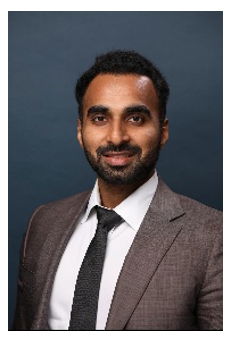
Aadithreya Varman (MS, FAICO, FWCRS) is Medical Director at Uma Eye Clinic,
Chennai, India.
References:
1He M, Abdou A, Ellwein LB, et al. Age-related prevalence and met need for correctable and uncorrectable near vision impairment in a multi-country study. Ophthalmology. 2014;121:417–22.
2Shetty R, Brar S, Sharma M, Dadachanji Z, Lalgudi VG. PresbyLASIK: A review of PresbyMAX, Supracor, and laser blended vision: Principles, planning, and outcomes. Indian J Ophthalmol. 2020;68(12):2723-2731.
3Russo A, Reinstein DZ, Filini O, t al. Visual and refractive outcomes following laser blended vision with non-linear aspheric micro-anisometropia (PRESBYOND) in myopic and hyperopic patients. J Refract Surg. 2022;38(5):288-297.
4Ganesh S, Brar S, Gautam M, Sriprakash K. Visual and refractive outcomes following Laser blended vision using non-linear aspheric micro-monovision. J Refract Surg. 2020;36(5):300-307.
Advertisement
Related Content
Advertisement
Latest CME















Advertisement
Advertisement
Trending on Ophthalmology Times Europe
1
Demodex blepharitis: Closing the diagnostic gap to improve ocular surface health
2
DEX implant shows benefit across RVO subgroups in real-world retrospective study
3
AI-predicted retinal function shows promise in geographic atrophy
4
European Dry Eye Society Congress 2026: real-world evidence on Artelac Complete in dry eye disease
5