
Sara M. Thomasy, DVM, PhD, DACVO, discusses the importance of examining how glaucoma affects companion animals like dogs, cats and horses
Sara M. Thomasy, DVM, PhD, DACVO, discusses the importance of examining how glaucoma affects companion animals like dogs, cats and horses
The interventional glaucoma mindset can maximise quality of life, but requires clinicians to act fast
Panelists discuss how both medications demonstrate favorable safety profiles in clinical trials, with aflibercept 8 mg benefiting from extensive 2-mg safety data, while acknowledging the need to monitor intraocular pressure due to increased injection volume, particularly in at-risk patients.
Panelists discuss how faricimab’s dual inhibition of Ang-2 provides additional benefits in vascular stability and inflammation reduction beyond VEGF-A suppression alone, potentially leading to improved durability and treatment outcomes in selected patients.
Panelists discuss how faricimab’s bispecific antibody design uniquely targets both VEGF-A and Ang-2 pathways, addressing the complementary role of Ang-2 in vascular destabilization and inflammation in retinal diseases.
Panelists discuss how novel intravitreal agents faricimab and high-dose aflibercept 8mg offer potential advantages in treating retinal diseases through their extended durability and dual mechanism of action.
Panelists discuss how ideal candidates for aflibercept 8 mg include patients with stable disease on current anti-VEGF therapy who seek reduced treatment burden, newly diagnosed patients, and those demonstrating good response to initial loading doses.
Panelists discuss how careful patient selection and management of potential complications - including surgical risks, device-related adverse events, and cost-benefit considerations requiring operating room resources - are crucial factors in successfully implementing the port delivery system in clinical practice.
Panelists discuss how the Port Delivery System (PDS) presents important considerations around adverse effects, patient selection criteria, and adoption challenges including surgical requirements and cost-benefit analyses that must be carefully weighed when integrating this technology into retinal practice.
Dr Jordan Graff highlights key steps in implanting the port delivery system, emphasizing incision and closure techniques with video clips.
Panelists discuss how the phase 3 PULSAR and PHOTON trials demonstrated the efficacy of aflibercept 8 mg through a design comparing 12- and 16-week dosing intervals to the aflibercept 2 mg standard 8-week dosing, with primary end points assessing noninferiority in visual acuity maintenance.
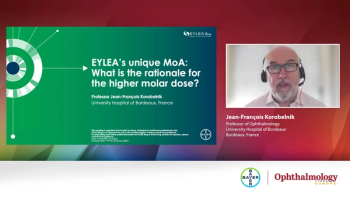
Panelists discuss how the aflibercept 8 mg higher molecular concentration enables extended durability through increased VEGF binding capacity and longer intraocular drug levels, potentially allowing for less frequent dosing while maintaining efficacy.
Panelists discuss how successful implementation of the port delivery system requires careful attention to surgical technique during both initial implantation and subsequent refill procedures, with specialized training and protocols that differ significantly from standard intravitreal injections in terms of procedural steps, sterility requirements, and patient preparation.
Panelists discuss how patients experiencing a high treatment burden with frequent anti-VEGF injections every 4-8 weeks are optimal candidates for the port delivery system, which can help reduce their number of clinic visits while maintaining therapeutic effectiveness.
Panelists discuss how the port delivery system (PDS) with ranibizumab represents a paradigm shift in neovascular AMD treatment by utilizing a surgically implanted refillable device that provides continuous medication delivery for 6 months, offering patients a preferred alternative to frequent intravitreal injections while ensuring consistent therapeutic levels.
Panelists discuss how aflibercept 8 mg demonstrates improved durability and maintenance of visual gains compared with 2-mg dosing, potentially reducing treatment burden while maintaining a similar safety profile.
Panelists discuss how treat-and-extend dosing with aflibercept 2 mg allows for individualized treatment intervals while maintaining vision gains. However, optimal extension timing must be carefully determined based on disease activity markers.
A panelist discusses novel treatments for retinal vascular diseases, including faricimab, aflibercept, and port delivery system with ranibizumab.
Panelists discuss how aflibercept’s molecular structure contributes to its clinical efficacy as a standard treatment for retinal vascular diseases.
Panelists discuss how anti-VEGF therapies have dramatically improved visual outcomes in patients with age-related macular degeneration and diabetic macular edema over the past decade. Key challenges persist, including treatment burden, adherence, and identifying optimal dosing regimens for individual patients.
Dr Wykoff addressed the top three questions retina specialists have about retinal non-perfusion
Arun Upadhyay, PhD, discusses new study findings from trials of OCU400 (Ocugen)
Research indicates suppressive valacyclovir could help patients avoid keratitis and iritis flare-ups
Vikas Chopra, MD, focused on minimally invasive glaucoma surgery (MIGS) and its significance in enhancing glaucoma treatment. He highlighted how MIGS allows ophthalmologists to perform interventions at an earlier stage and with increased safety, resulting in improved patient outcomes.
Victoria L. Tseng, MD, PhD, discusses SLT, microshunts and what glaucoma specialists can learn from large data sets
Michael Singer, MD, shared insights from on his experience using a preservative-free, chloroprocaine ophthalmic gel as anesthesia for intravitreal injections and the results of research on the effectiveness of gel versus traditional drops.

Brent Kramer, MD, presents on an alternative to IV sedation for cataract surgeries and complex cases
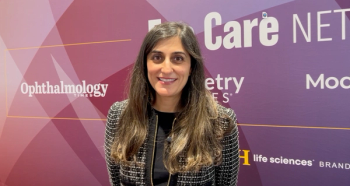
Fatemeh Rajaii, MD, PhD, an associate professor at Wilmer Eye Institute, Johns Hopkins, discussed emerging therapies in thyroid eye disease (TED) from her presentation at the American Academy of Ophthalmology’s annual meeting in Chicago.