
Dr Jay Duker discusses EYP-1901, EyePoint Pharmaceuticals’ sustained-release anti-VEGF drug for the treatment of wet AMD.
Dr Jay Duker discusses EYP-1901, EyePoint Pharmaceuticals’ sustained-release anti-VEGF drug for the treatment of wet AMD.

At AAO 2021, Aerie Pharmaceuticals presented the results of their phase 2b clinical trial of AR-15512, a TRPM8 antagonist, for the treatment of dry eye.
Verana Health showcases the VeraQ quality measures dashboard for the IRIS registry report at AAO 2021.
Dr Mohamed Abou Shousha discusses Heru’s wearable AI-powered diagnostic devices at AAO 2021.

A brief overview of the plethora of findings presented at the 2021 American Academy of Ophthalmology meeting held November 12-15 in New Orleans, LA.
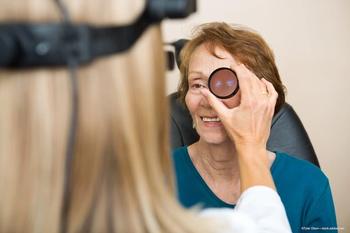
In a poster presented at the American Academy of Ophthalmology 2021 annual meeting in New Orleans, Dr Mark Wieland noted that the port delivery system with ranibizumab provides drug delivery over an extended period.

Dr Sunir J. Garg speaks on the influence of COVID-19 universal face masking on the risk of endophthalmitis following intravitreal anti-VEGF injections.
During a presentation at the American Academy of Ophthalmology 2021 annual meeting in New Orleans, Dr Veeral Sheth presented research that found faricimab, a bispecific monoclonal antibody, provided sustained retinal stability in patients with diabetic macular oedema (DMO) compared with other retinal treatments.
Speaking at the American Academy of Ophthalmology 2021 annual meeting in New Orleans, Dr Ines Lains explained that the mechanisms of AMD progression currently remain poorly understood and the tools to predict and halt progression are limited.

Dr Cathleen McCabe describes how VUITY, the first and only FDA-approved eye drop to treat age-related blurry near vision, provides opportunities for patients looking for spectacle independence.
Dr Ajay Kuriyan discusses his poster at AAO, "Fluctuations in central subfield thickness associated with worse visual outcomes in patients with diabetic macular oedema in clinical trial setting."
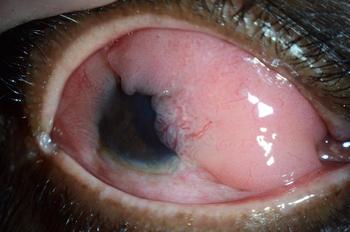
In a presentation at the American Academy of Ophthalmology’s 2021 annual meeting in New Orleans, Nathan Hall pointed out that an epidemiologic analysis of malignant ocular surface tumours found significant differences in geographic prevalence rates in the United States.
During a presentation at the American Academy of Ophthalmology 2021 annual meeting, Dr Denise Freitas reported that the ocular findings in infants with congenital Zika virus syndrome were similar among the affected infants and occurred frequently. The most prevalent of the findings was optic nerve pallor.
Dr Felipe Medeiros in a presentation at the American Academy of Ophthalmology 2021 annual meeting in New Orleans, noted that a phase 3 clinical extension study of the bimatoprost implant found that patients’ IOP was lowered and stayed low with no additional treatment or changes in their visual fields.

Dr Roger A. Goldberg, speaking at the American Academy of Ophthalmology 2021 annual meeting in New Orleans, noted that small misalignments in the plunger can lead to possible overdosing.
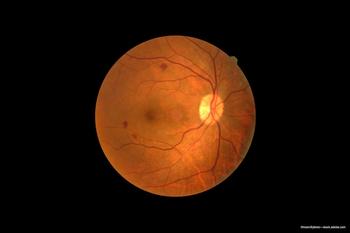
During the American Academy of Ophthalmology 2021 annual meeting in New Orleans, Dr Dilsher Dhoot reported the results of the KESTREL and KITE in which brolucizumab was compared with aflibercept for treating diabetic macular oedema.
Dr Shady Awwad in a presentation at the American Academy of Ophthalmology’s 2021 annual meeting in New Orleans, pointed out that the application of mitomycin C after corneal crosslinking does not prevent development of corneal haze after the procedure and instead contributes to development of more corneal haze.

Intra-arterial tPA treatment could provide benefits for patients with central retinal artery occlusion.

ImprimisRx President John Saharek shares an update on a few of the company's latest products during AAO 2021.

The American Academy of Ophthalmology's annual meeting will proceed November 12 to 15 in New Orleans, Louisiana.
Michael R. Robinson, MD, Allergan, discusses the results from a study analyzing an investigational ophthalmic solution for treatment of symptoms associated with presbyopia presented during the virtual AAO 2020 meeting.
Tanner Ferguson, MD, Cole Eye Institute, discusses findings from the study "Trabecular Micro-bypass Stent Implantation (iStent)" + Phacoemulsification in PXG: Six-Year Outcomes," during the virtual AAO 2020 meeting.
John A. Hovanesian, MD, discusses the highlights of his presentation on a clinical study evaluating dexamethasone vs prednisolone acetate 1% in controlling postop pain/inflammation in sequential cataract surgery patients.
Robert Weinstock, MD, presents data from a retrospective multicenter study focusing on the efficacy of dexamethasone intraocular suspension 9% delivered at the time of cataract surgery.
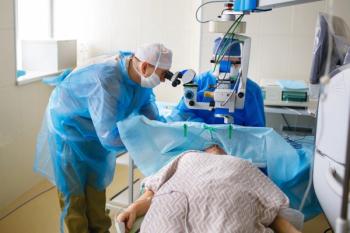
During AAO 2020, Neal H. Shorstein, MD, explains how physicians at Kaiser Permanente have a streamlined regimen using a prophylactic drop-free drug before cataract surgery for more than a decade.
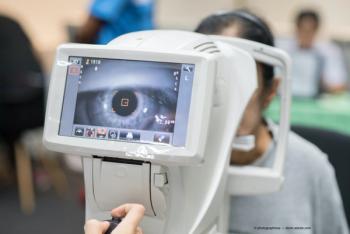
Bradley Smith, MD, presents at AAO 2020 on how fingolimod 0.5 mg, a first-line treatment for multiple sclerosis, may reduce both the number of relapses and disease progression in patients with relapsing-remitting MS as well as the incidence of uveitis.

Kristen Brotherson, vice president, US surgical marketing for Alcon, discusses some of the recent advances in cataract surgery-related technologies, including a new advanced lens for patients with presbyopia (AcrySof IQ Vivity IOL).
Rick Eiswirth, president and CEO of Alimera Sciences, provides an update on the company’s clinical trial that aims to evaluate its fluocinolone acetonide intravitreal implant 0.19 mg (Iluvien) as a baseline therapy for diabetic macular edema.
Rudy Nuijts of the University Eye Clinic Maastricht, the Netherlands, discusses the highlights of his AAO 2020 presentation on a combination treatment regimen for lowering the incidence of cystoid macular oedema following category surgery.
Tamer Mahmoud, MD, PhD, discusses autologous retinal transplant (ART) for macular holes, a procedure he developed, which is providing anatomic hole closure in the vast majority of cases as well as increases in visual acuity.