News

Professor Gerd U. Auffarth and collegues have found that ophthalmic viscoelastic devices that combine both dispersive and cohesive properties, so that they can be used in sequence and at the appropriate phases of cataract surgery, can result in decreased complications, low adverse events, improved visibility and good space management.
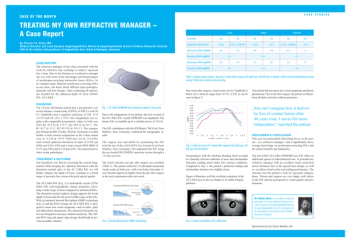
The second-generation Malyugin ring is a versatile pupil expansion ring with high efficacy in femtosecond laser-assisted cataract surgery. Professor Boris Malyugin notes its advantages, having used it on a variety of classically difficult eyes and in complicated surgical cases.

The combined clinical use of pattern electroretinography for the detection of early glaucoma indicators and selective laser trabeculoplasty for intervention may help realise the potential of early detection and treatment.
Usually the reserve of millennials, one surgeon finds that Instagram can help make connections in clinical settings.
In the early days of my career as a private practitioner in the field if ophthalmology, armed with just a slit lamp and a trial frame, the challenge was only the appropriate care of the patient.
Multifocal IOLs (mIOLs) can provide excellent uncorrected visual acuity at all distances. However, photic phenomena such as glare and halos are inherent to the design of these lenses and make preoperative patient councelling, careful case selection, and individualised weighing of benefits and side-effects important.
Created for surgeons, by surgeons – a new method of approaching gel stent implantation provides better outcomes for patients.
Ongoing case series is revealing small-incision lenticule extraction to be better than surface ablation (SA) for all myopic laser corrections. However, SA still is useful in patients with thin corneas and therapeutic indications, according to Prof. Suphi Taneri.

Diabetes doubles the risk of cataract in the general population, with an even greater increased risk among people aged under 70, according to researchers.
Hyper-reflective subretinal infiltrates visible on spectral domain optical coherence tomography (SD-OCT) could help diagnose primary vitreoretinal lymphoma (PVRL), researchers believe.
The Malyugin ring is a safe alternative to traditional pupil-expansion approaches in cataract surgery. Here, best practice for safe surgery and a case study are described
British installation artist, Luke Jerram, and researchers at Bristol Vision Institute, are creating something that will raise awareness about the nature of cerebral visual impairment in an artist’s residency at the University of Bristol in the United Kingdom.
Ocular allergy affects the quality of life of millions of people every year. Understanding the different mechanisms involved will increase their future therapeutic options.
Ocular surface disease (OSD) and dry eye disease (DED) are very common problems in the elderly, and they both considerably decrease vision-related quality of life.
An artificial vision device (MyEye, OrCam) has helped a blind veteran regain his independence, according to the charity Scottish War Blinded.
Trabecular bypass procedures have become a viable option for glaucoma treatment. The Kahook Dual Blade (KDB) facilitates ab interno trabeculectomy by employing a single-use, micro-engineered excision blade that makes precise parallel incisions in the trabecular meshwork and inner wall of the Schlemm’s canal to enhance aqueous outflow. A recent study highlights the effectiveness of its application.
Cataract surgery increases the risk of diabetic macular oedema (DMO), medical records from the United Kingdom suggest. An analysis of 4,850 eyes showed that the rate of DMO requiring treatment spiked about 4 months after the surgery.
A low dose of ranibizumab (Lucentis, Genentech/Roche) works well as a treatment for retinopathy of prematurity (ROP), researchers say.
According to the latest data by the World Health Organization, there are approximately 36 million blind people in the world, and the numbers keep growing due to increasing population sizes in developing countries and rising life expectancies in developed nations.

During the XXXV Congress of the ESCRS, an international panel of expert FLACS users gathered to share their research and insights, and to learn from the experiences of their colleagues.
The first human clinical trial to preliminarily evaluate the safety and efficacy of cellular therapy with mesenchymal stem cells for the corneal stroma has shown promise.
Automated capsulotomy is a new option that surgeons can choose for patients with opaque corneas, as well as when performing an open sky rhexis during the triple procedure and during surgery that requires the use of premium or multifocal lenses.
In a world of mass production and high technology, an ocularist in Nottingham, United Kingdom, has inspired followers around the world with his high-touch approach to hand-crafting prosthetic eyes as portrayed in a couple of YouTube videos.
Optical coherence tomography angiography (OCTA) is a new imaging technique that has the potential to move rapidly into routine clinical practice. OCTA comprises different OCT-based technologies, which enable the non-invasive assessment of retinal perfusion, based on red blood cell movement in the optic nerve head, the peripapillary and the macular retina.
It is important with corneal angiography to remember that every patient is different so your technique might very slightly from patient to patient.
Research shows that enhancement rates after LASIK range from approximately 7.8% to 20%, with regression of approximately 1 diopter after 10 years.
Use of a novel semi-fluorinated alkane drug delivery technology as a vehicle to deliver cannabinoids to the ocular surface reached target tissues without systemic side effects in preclinical studies.
Corneal epithelial thickness mapping may become an easy and objective tool in the diagnosis of biomechanically unstable corneas and perhaps a multitude of anterior segment disorders.
As another year comes to an end, five members of Ophthalmology Times Europe’s Editorial Advisory Board reflect and share their perspectives on the exciting opportunities that lie ahead for ophthalmologists in 2018, whilst also considering the potential challenges.
Advertisement
Advertisement