
Following the lockdown due to COVID-19, investigators highlight the need to re-assess policies on patient follow-up and establish new approaches to provision of care for elderly patients.
Following the lockdown due to COVID-19, investigators highlight the need to re-assess policies on patient follow-up and establish new approaches to provision of care for elderly patients.
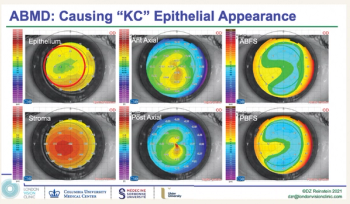
The epithelium adapts to compensate for changes in the cornea and these changes can be detected with high sensitivity, reducing both false positives and false negatives in the diagnosis of keratoconus.

According to one study, when genetic testing is coupled with advanced imaging, the chances of identifying keratoconus early are greater.
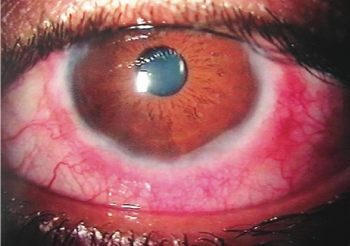
Ophthalmologists should look past the eyes in patients presenting with a persistent ocular allergic response and be mindful that sight-threatening vernal keratoconjunctivitis is a possibility.
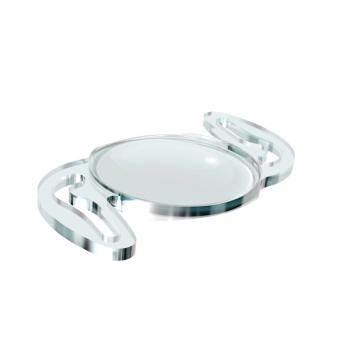
In “modified monovision”, which can be achieved with a new IOL, one eye predominantly manages distance vision and the other near vision—as with standard monovision—but the extended depth of field provides a degree of intermediate vision that is independent of spectacles.

Taking place from 16–20 September 2022, and following the success of last year’s congress, the 40th ESCRS will again be a face-to-face event but supported by a virtual conferencing platform that will allow the sessions to also be streamed.
Symptoms of acute optic neuritis resulting from the disease can resolve in treated rapidly.